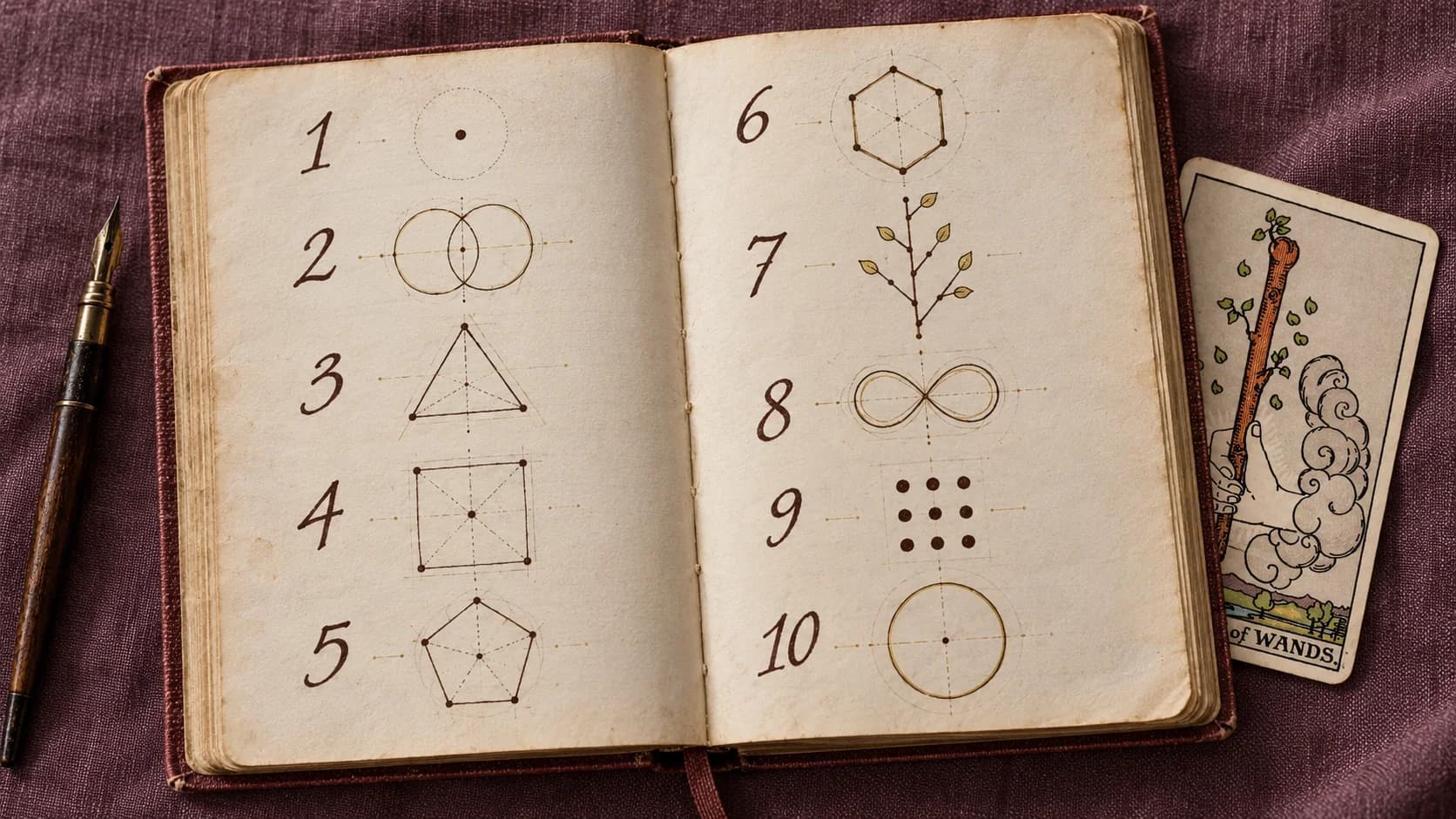
An idea begins. You weigh your options, take a few steps, find your rhythm, and then something changes. You adjust, keep going, and eventually reach a point where you can look back at what has taken shape.
It’s a familiar pattern. You might recognise it in learning a skill, building a relationship, or bringing a creative project to life.
The numbered Tarot cards offer a way to explore patterns like these. Across the four suits, the sequence from Ace to Ten moves through beginnings, development, challenges, and outcomes.
If you’re learning Tarot, noticing these connections can make the deck feel more familiar. Each card has its own story, and its number gives you another place to begin.
What is Tarot numerology?
Tarot numerology explores the symbolic meanings associated with numbers in Tarot cards. It can help you notice relationships between cards and understand how their themes develop.
Different Tarot traditions interpret numbers differently. The associations below are a beginner-friendly introduction to common modern approaches, illustrated with Rider–Waite–Smith cards. They are symbolic guides, and each card’s imagery adds detail that a number alone cannot provide.
We’ll focus on the 40 numbered cards of the Minor Arcana: Ace through Ten in Cups, Pentacles, Swords, and Wands. In this sequence, the Ace represents one.
The 16 court cards, comprising Pages, Knights, Queens, and Kings, sit outside this Ace-to-Ten framework. The 22 Major Arcana cards have their own numbering and symbolism, which deserve a separate introduction.
Tarot numbers at a glance
These common Tarot numerology associations offer a starting point. The suit, imagery, and context of a reading bring each card’s meaning into focus.
| Number | Main themes | A simple way to remember |
|---|---|---|
| Ace / One | Beginnings, opportunity, potential | A first spark |
| Two | Connection, balance, choice | Two possibilities meet |
| Three | Growth, expression, collaboration | Something takes shape |
| Four | Structure, stability, containment | A foundation forms |
| Five | Change, friction, challenge | The familiar shifts |
| Six | Support, cooperation, readjustment | A way forward emerges |
| Seven | Assessment, options, perseverance | Consider your next step |
| Eight | Effort, movement, capability | Energy finds direction or meets a barrier |
| Nine | Fruition, experience, persistence | Much has developed |
| Ten | Culmination, completion, renewal | A cycle reaches its fullness |
Ace: the possibility of a beginning
An Ace often introduces something in its earliest form: an opportunity, a feeling, an insight, or a spark of enthusiasm.
Imagine the moment you think, “I’d like to try that.” There may be excitement, but plenty is still undecided.
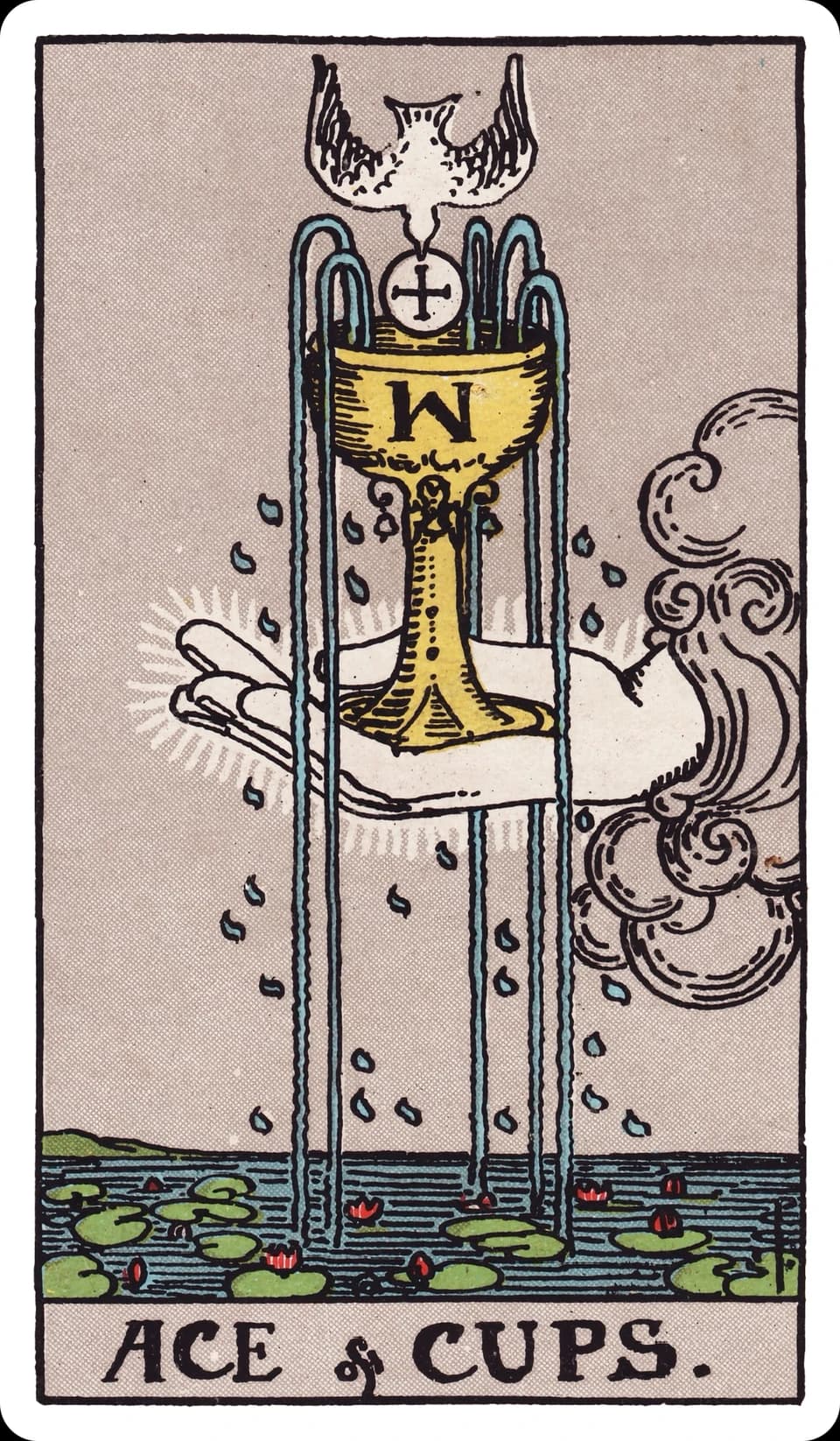
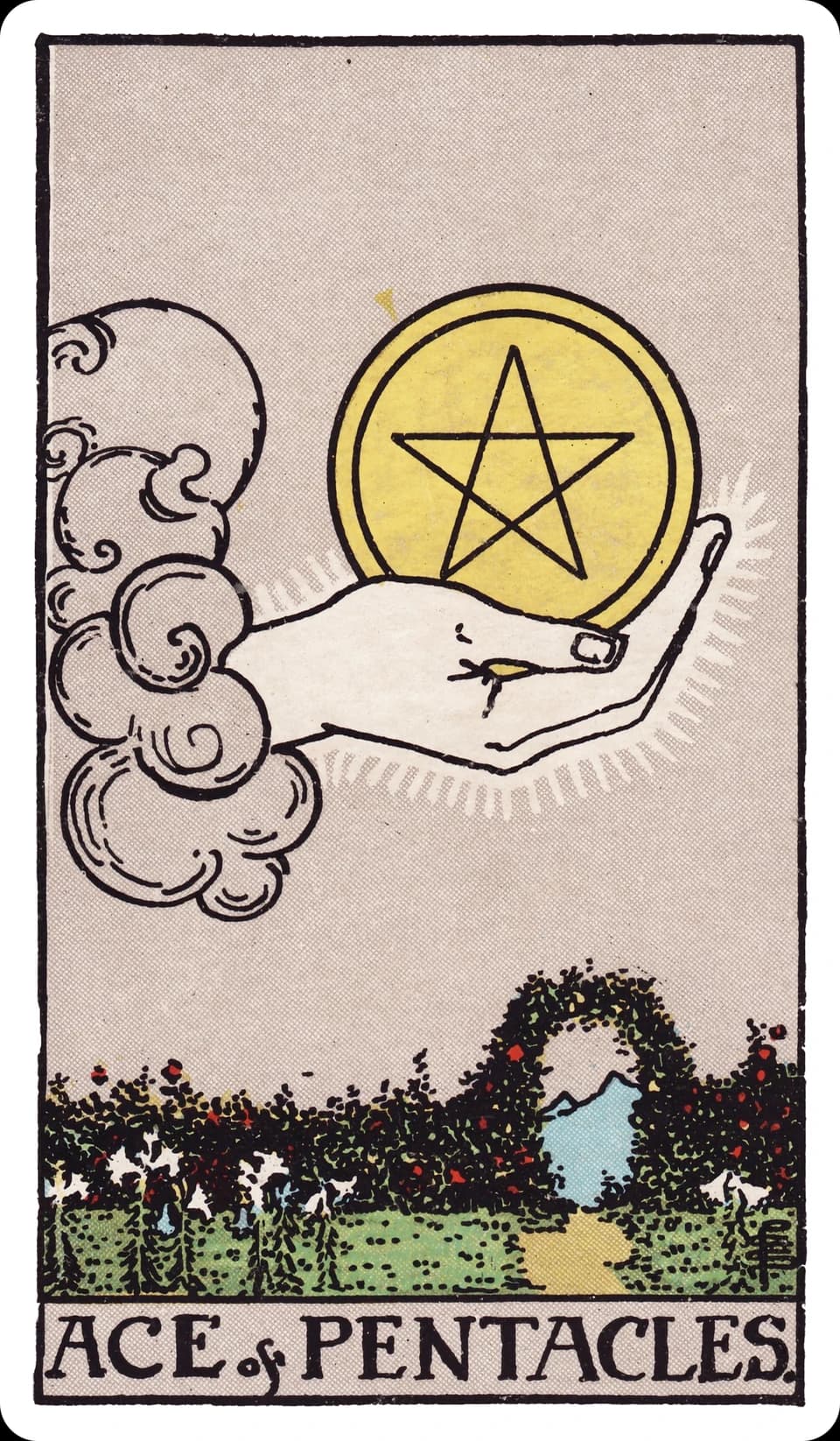
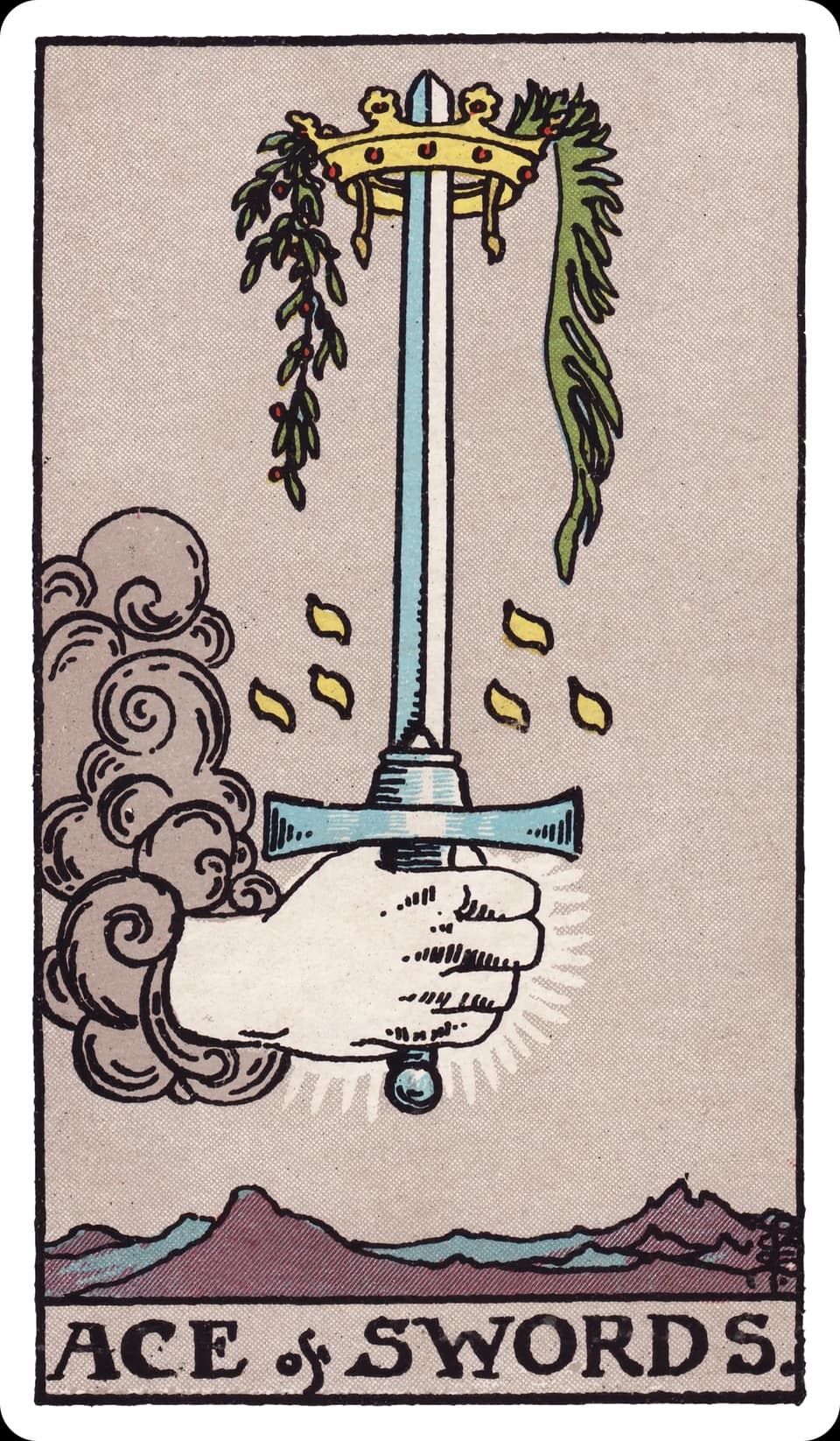
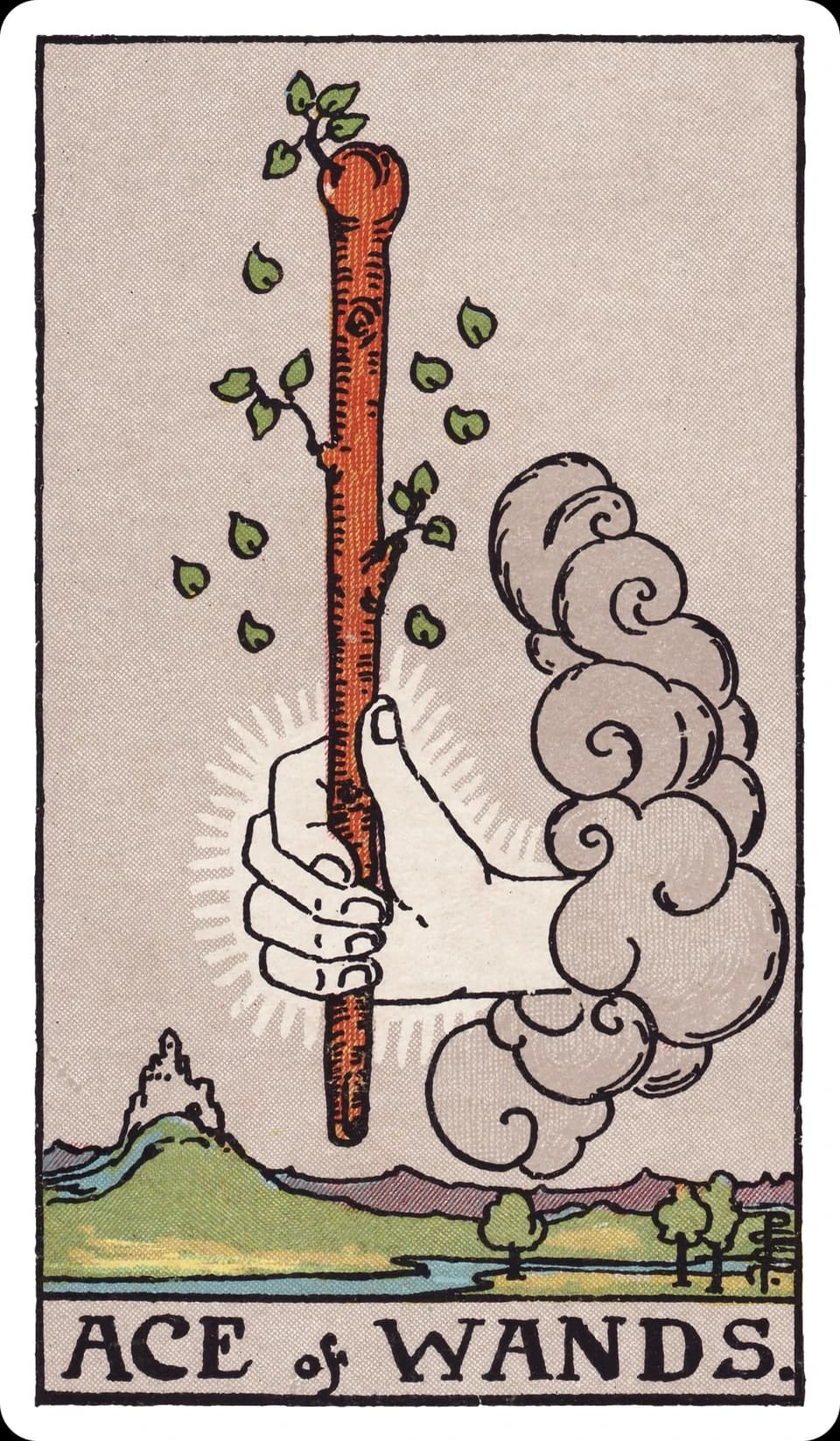
The Ace of Wands is commonly associated with inspiration and creative potential. The Ace of Pentacles brings the beginning into practical life, such as an opportunity to develop a skill or build something tangible.
An Ace gives a beginning room to unfold. What happens next depends on the circumstances and what you do with it.
Two: meeting, balancing, choosing
With two, another person, possibility, or priority enters the picture.
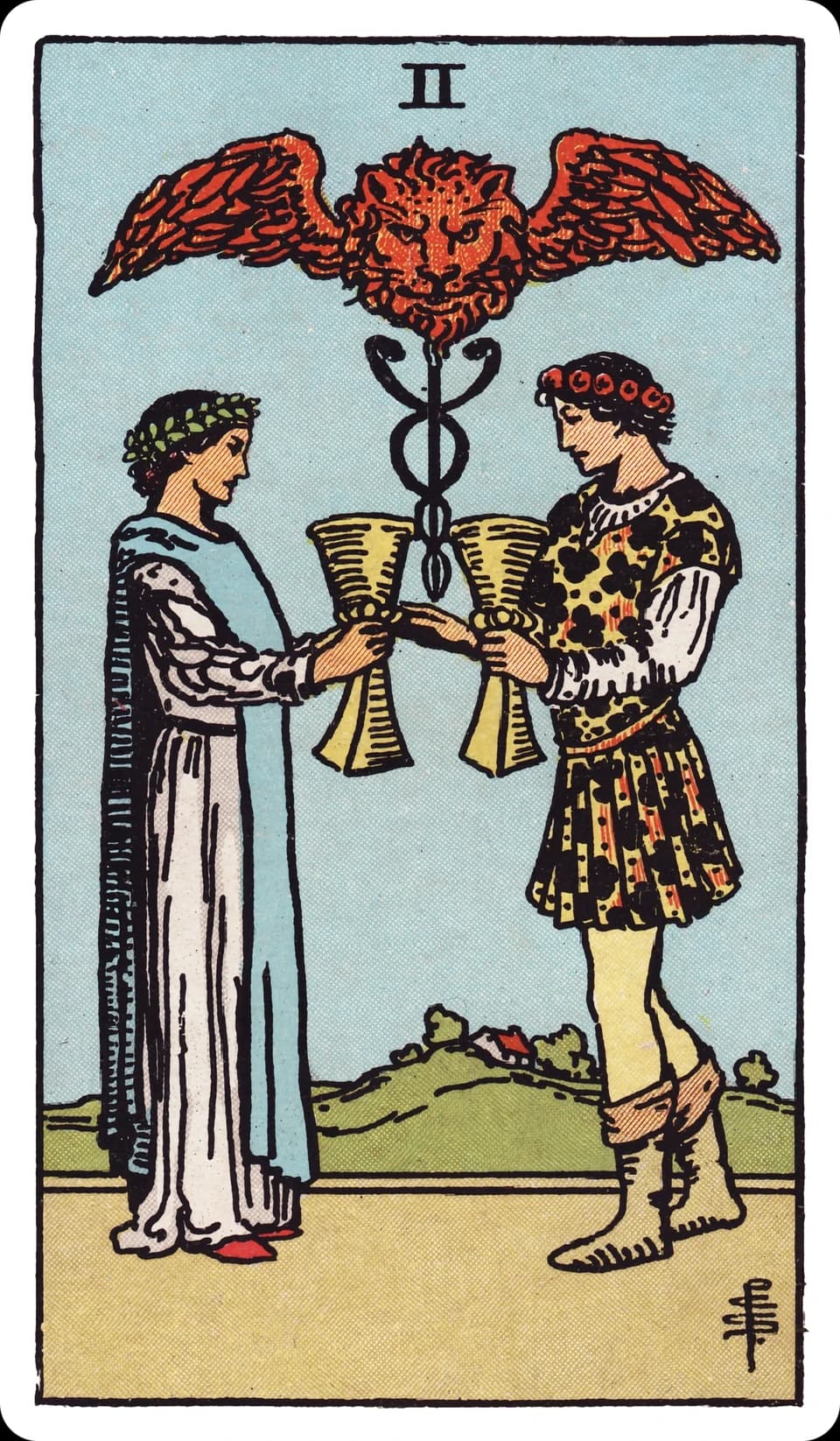
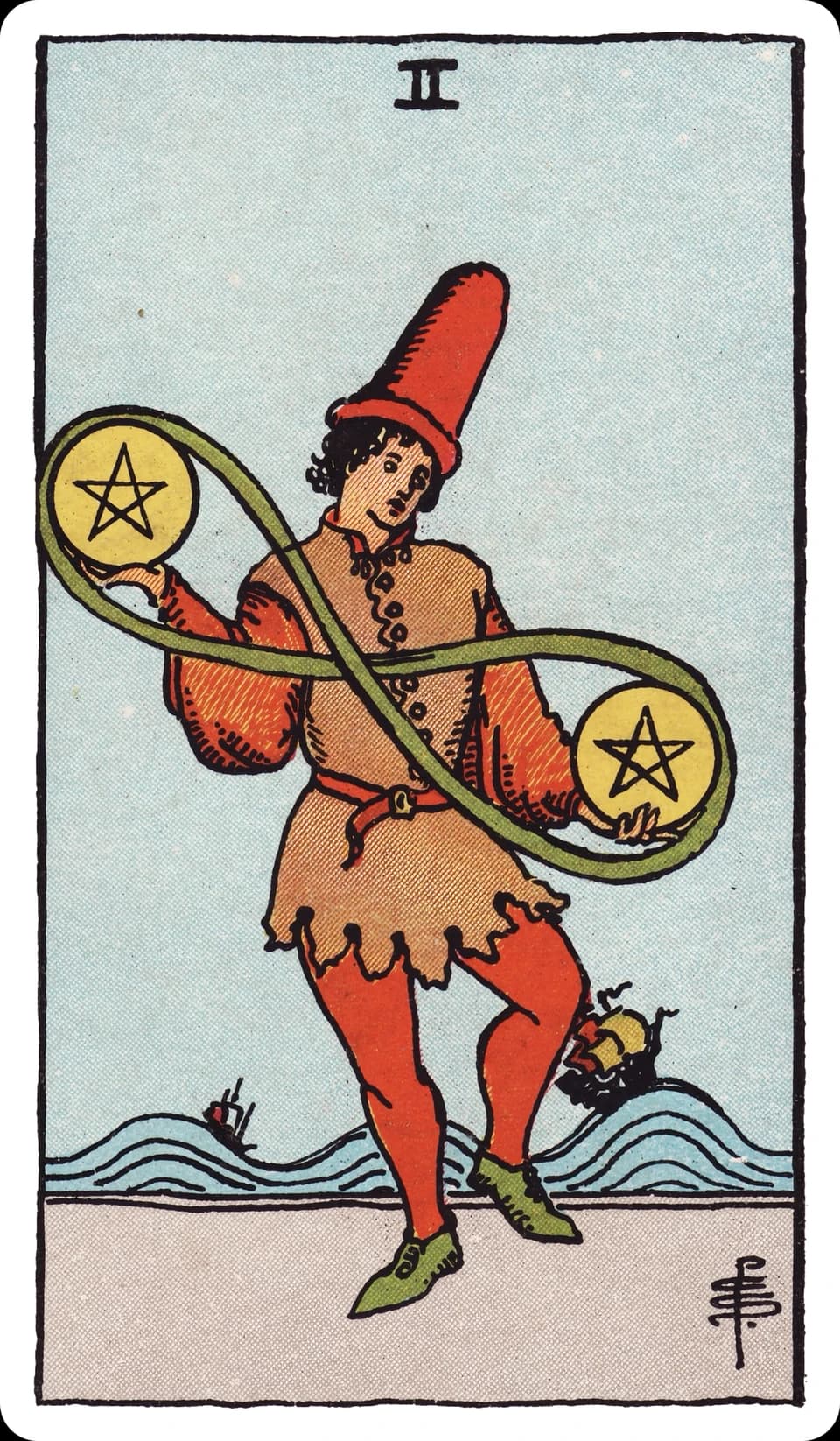
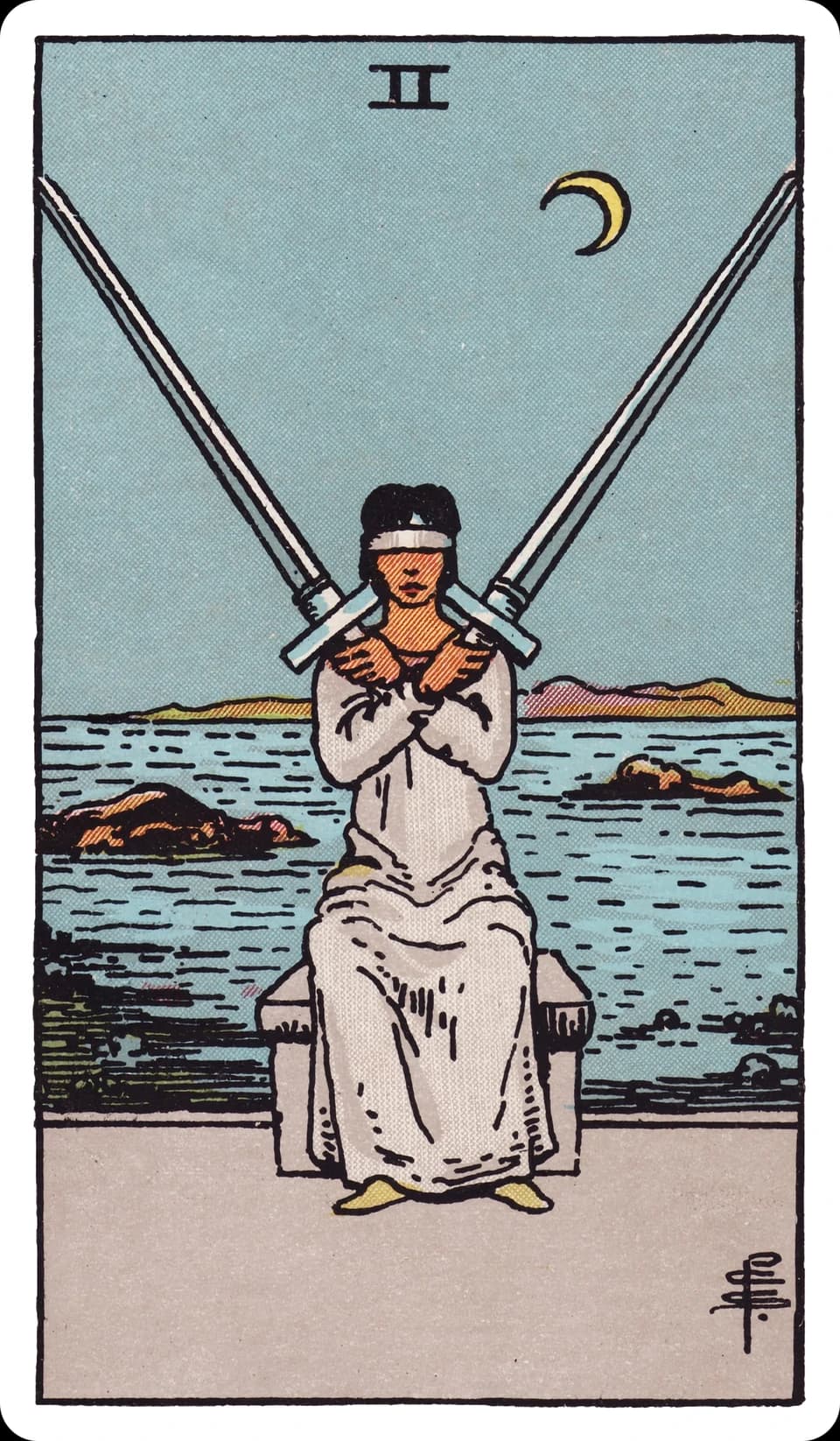
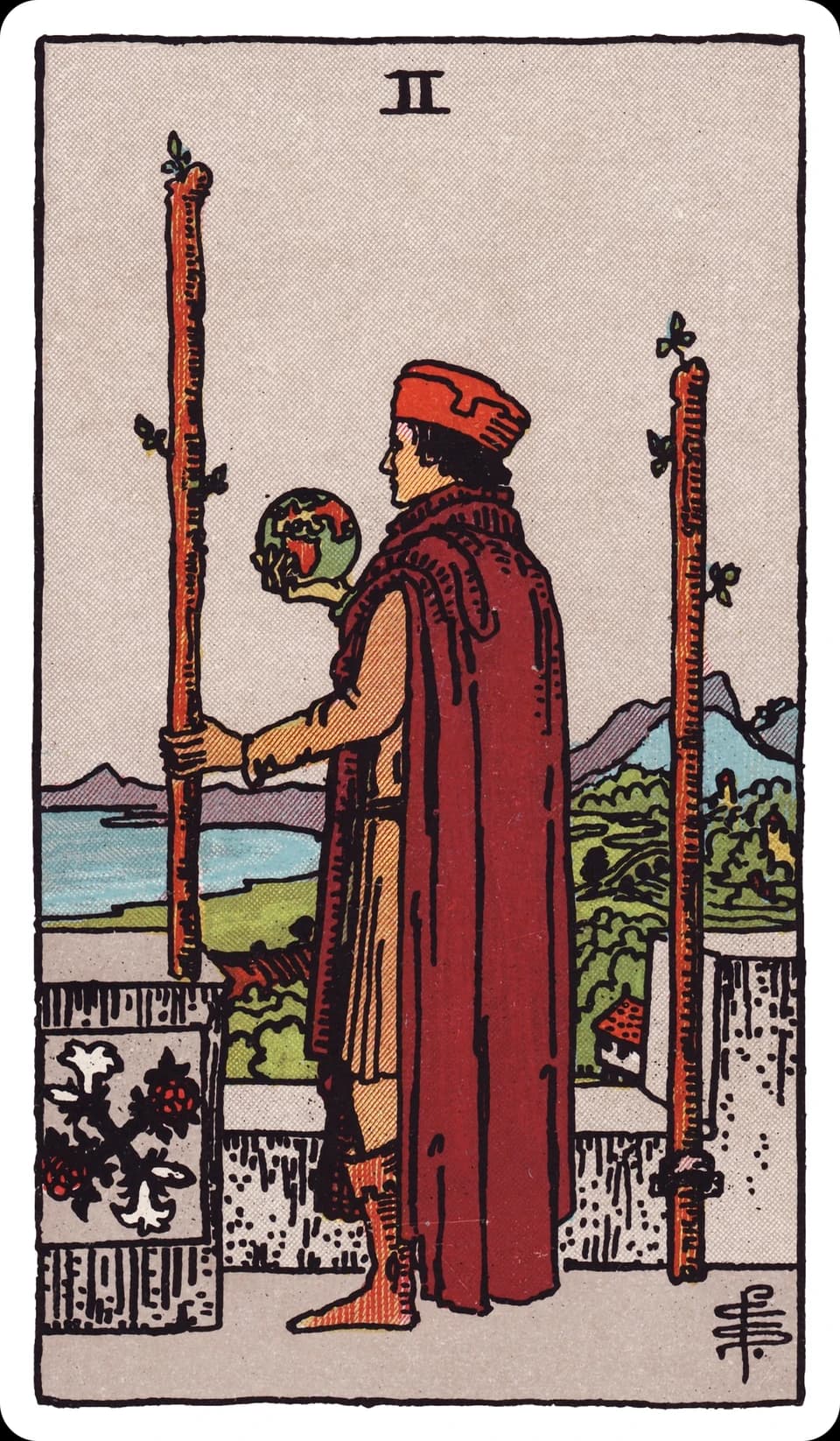
The Two of Cups explores mutual connection. The Two of Pentacles shows the effort of keeping different demands in motion. The Two of Swords brings us to the discomfort of a difficult choice.
These cards share an interest in how two things relate. That relationship might feel supportive, uncertain, or demanding.
Think of arranging time for both work and rest, or discovering what it means to meet someone halfway.
Three: something takes shape
Three is often linked with growth, expression, and the results of things coming together.
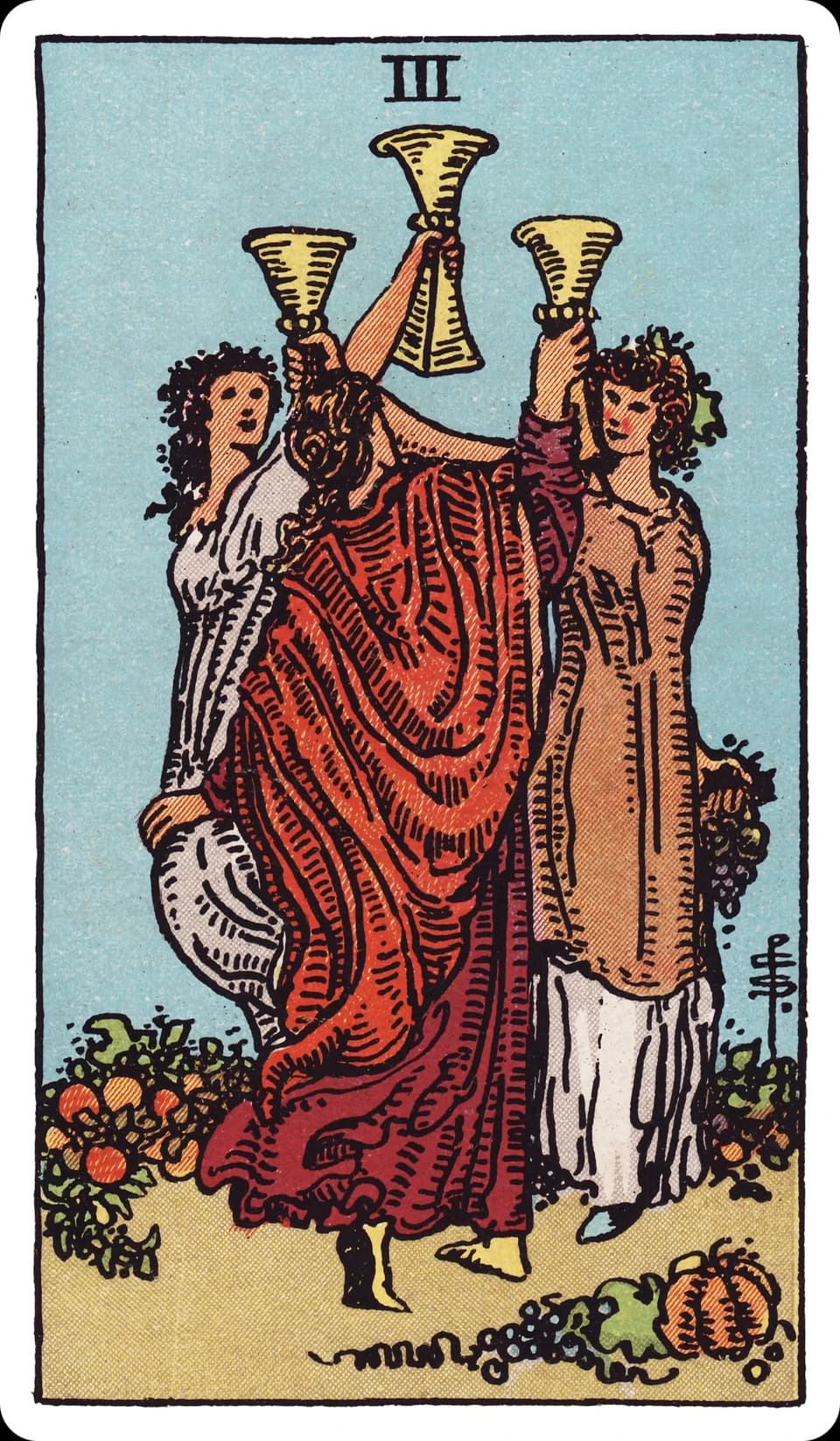
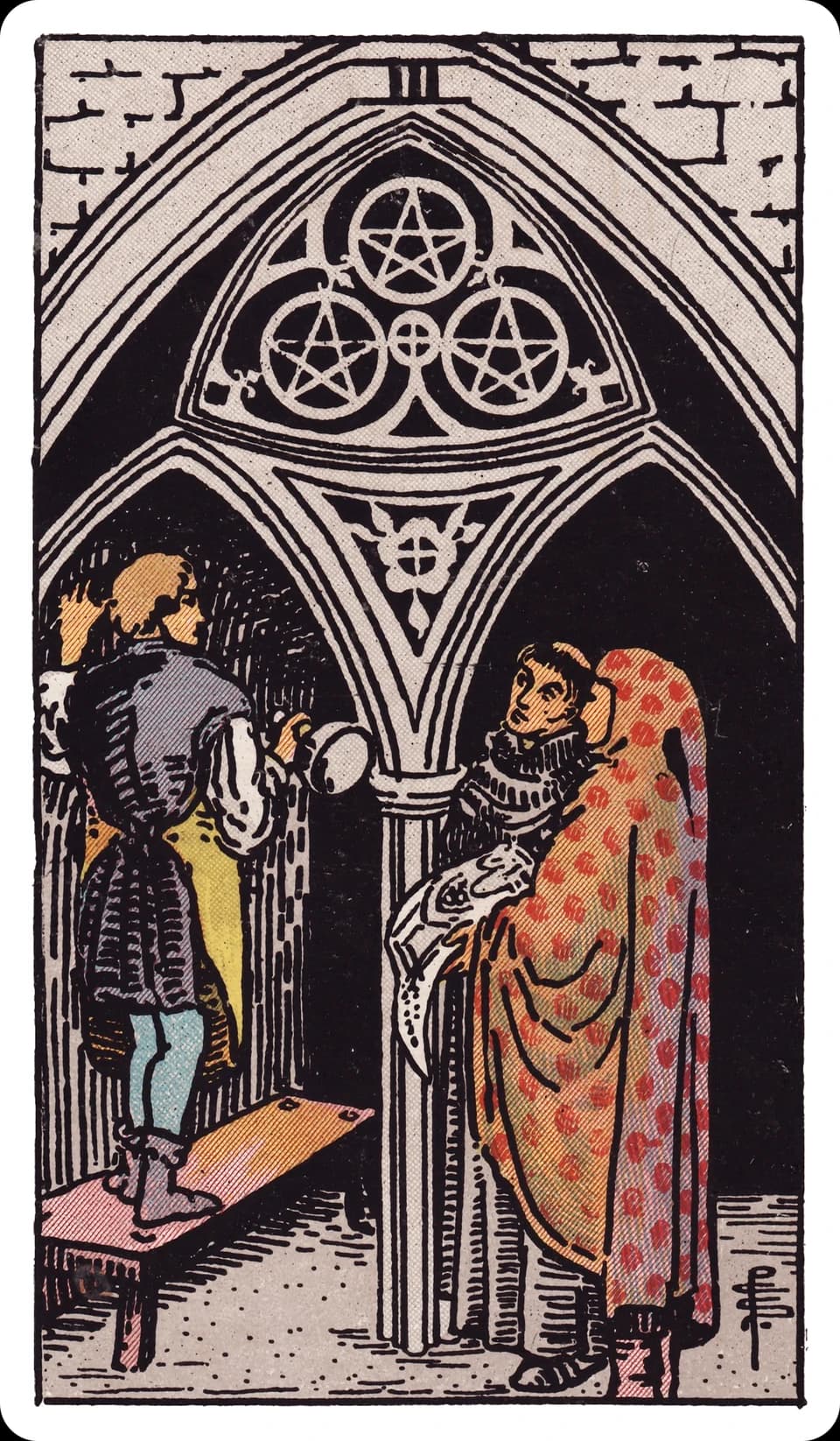
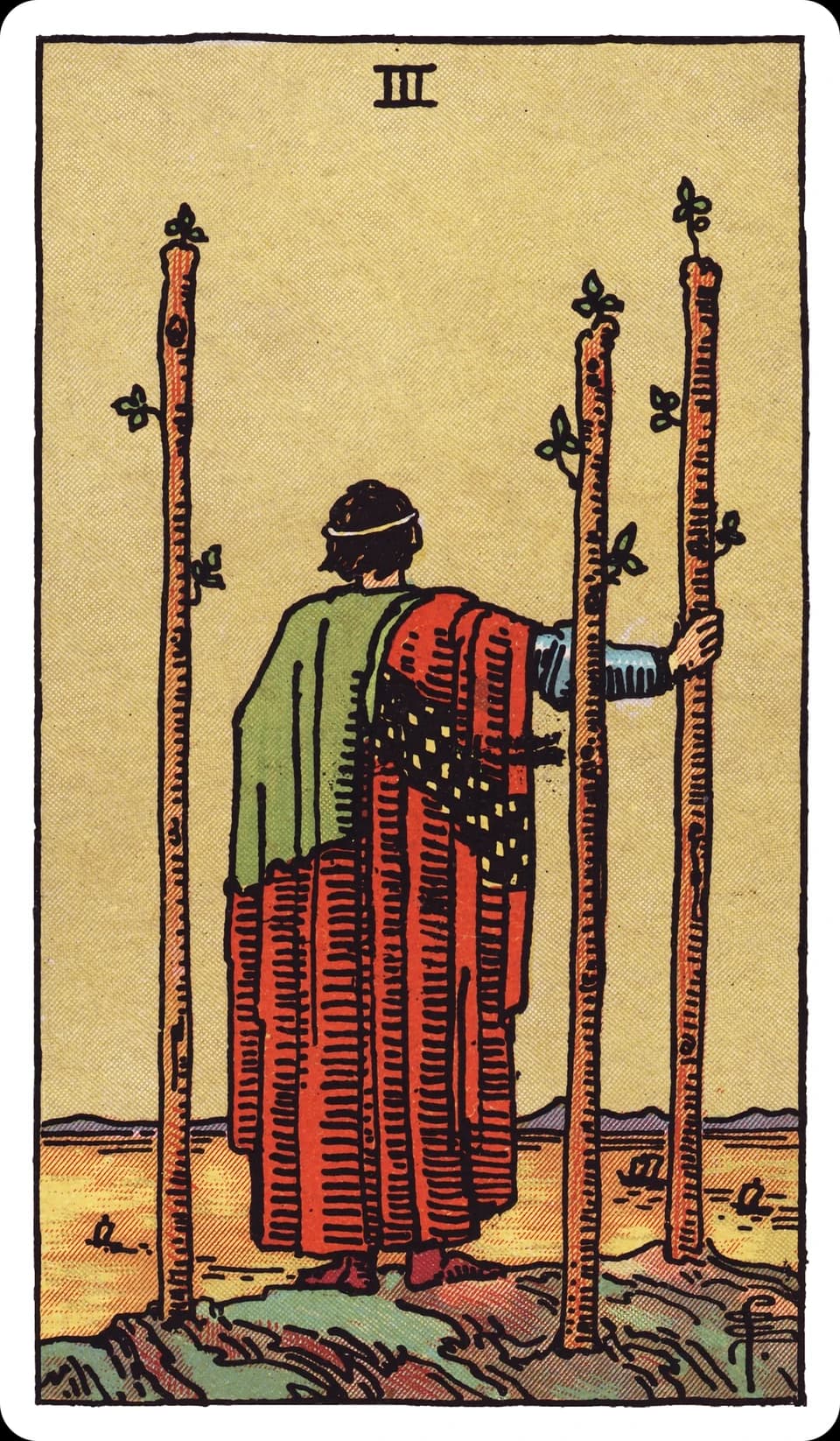
In the Three of Pentacles, people contribute different skills to shared work. The Three of Cups celebrates companionship and shared enjoyment.
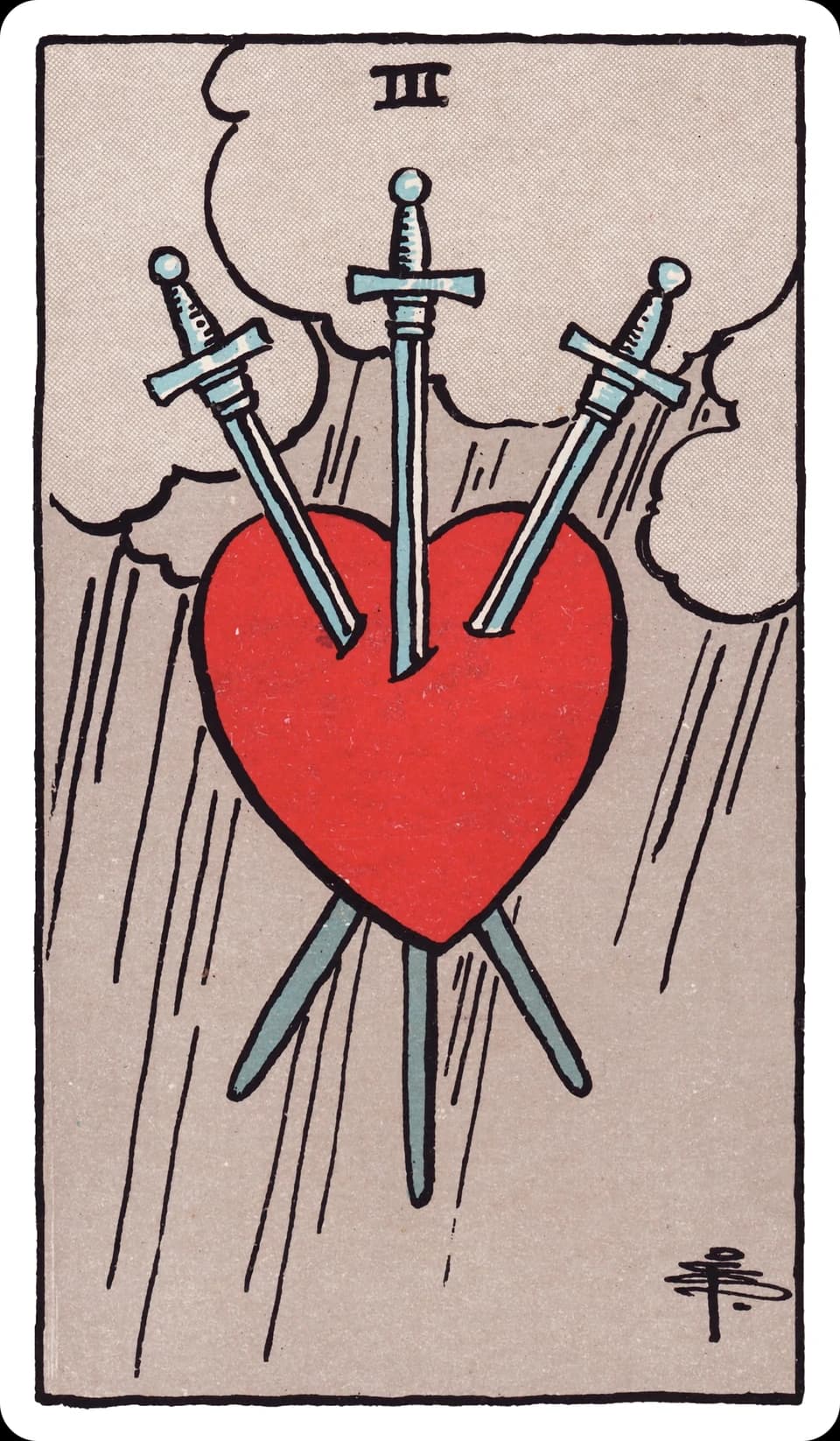
But growth isn’t always comfortable. The Three of Swords, with its pierced heart, expresses sorrow and painful understanding. It reminds us to keep looking at the individual card, even when we know the number’s general associations.
Three can help us ask what is developing, and the image shows what that development feels like.
Four: finding a foundation
Four is commonly associated with structure, stability, and containment.
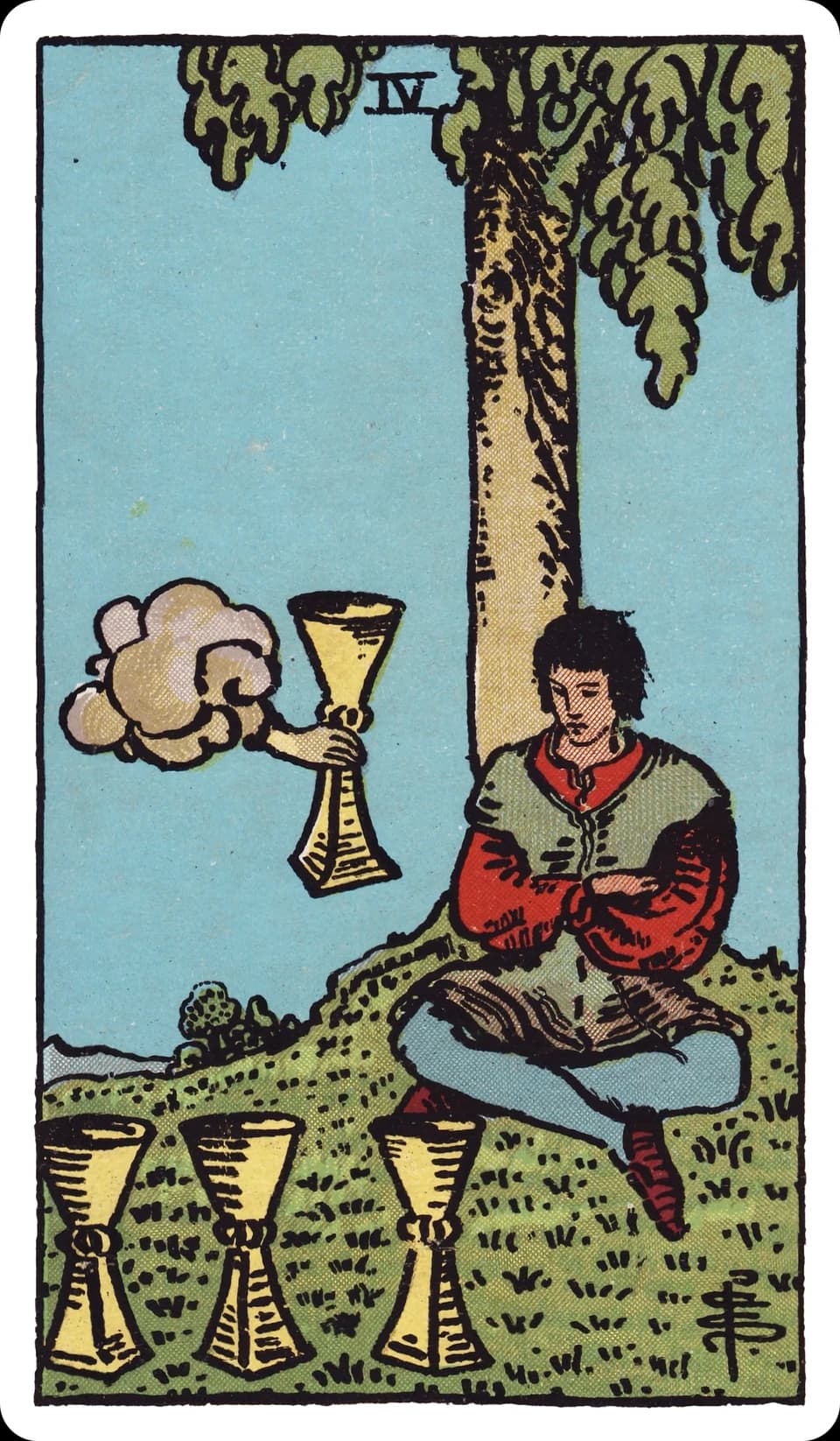
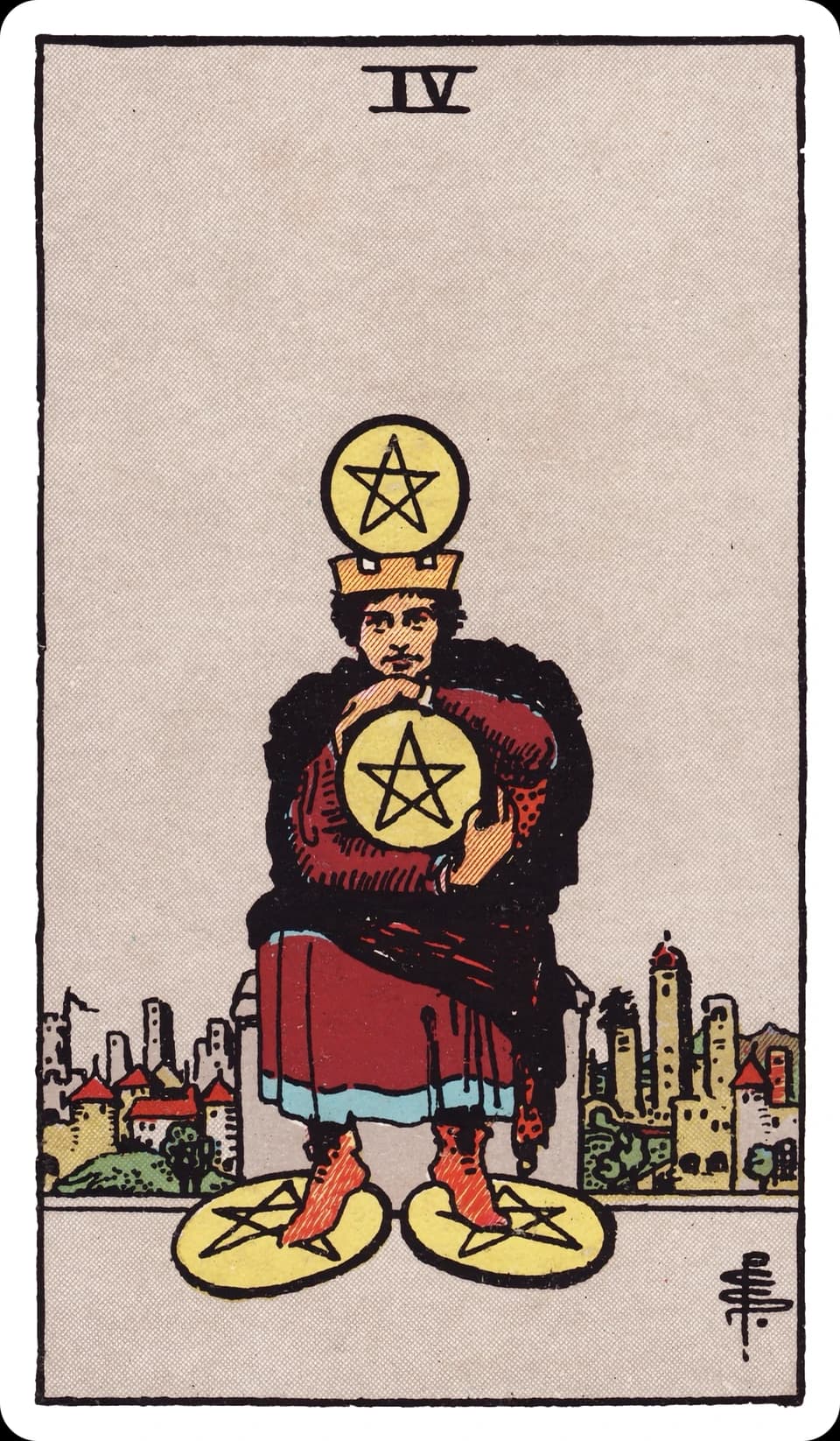
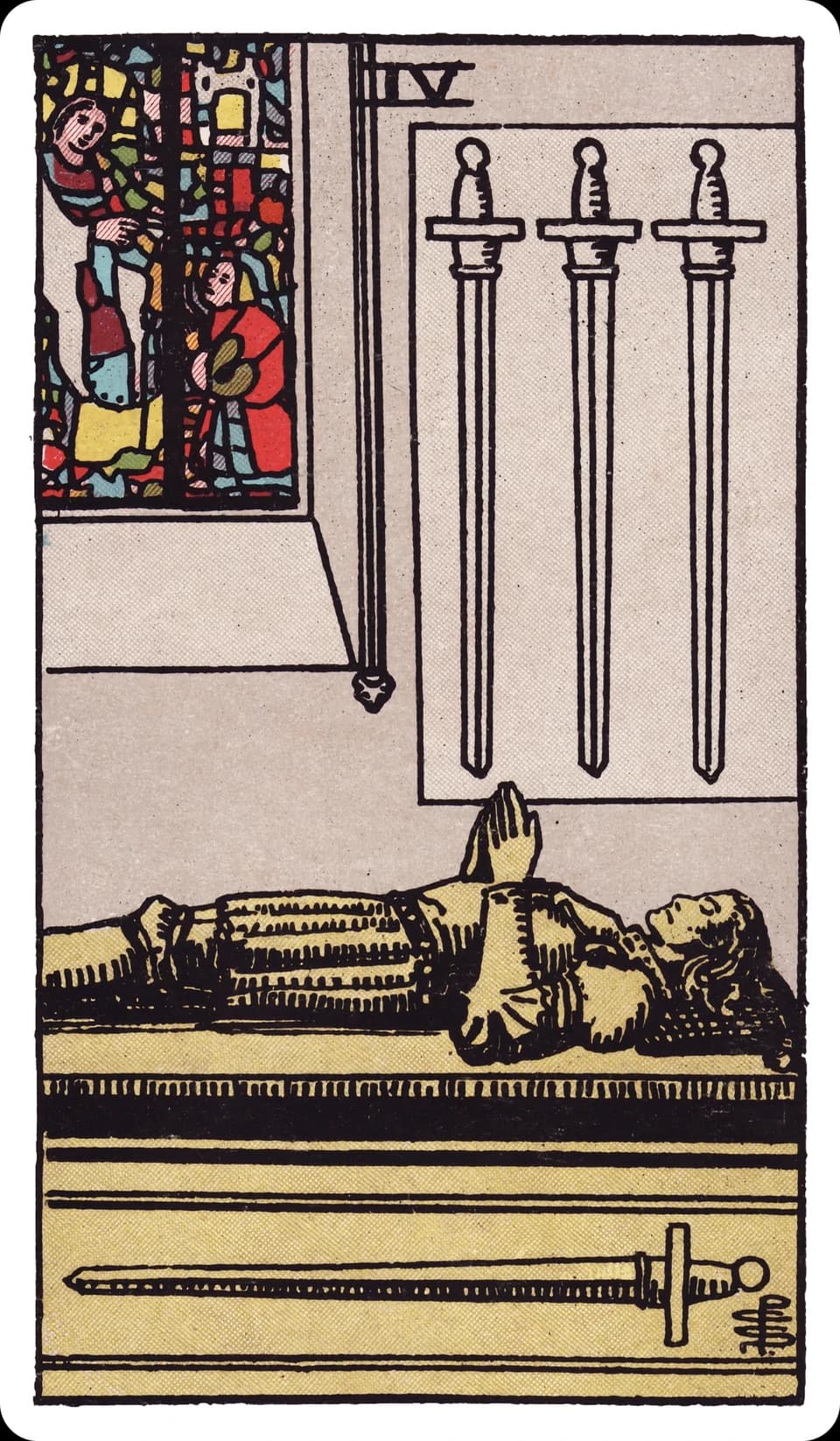
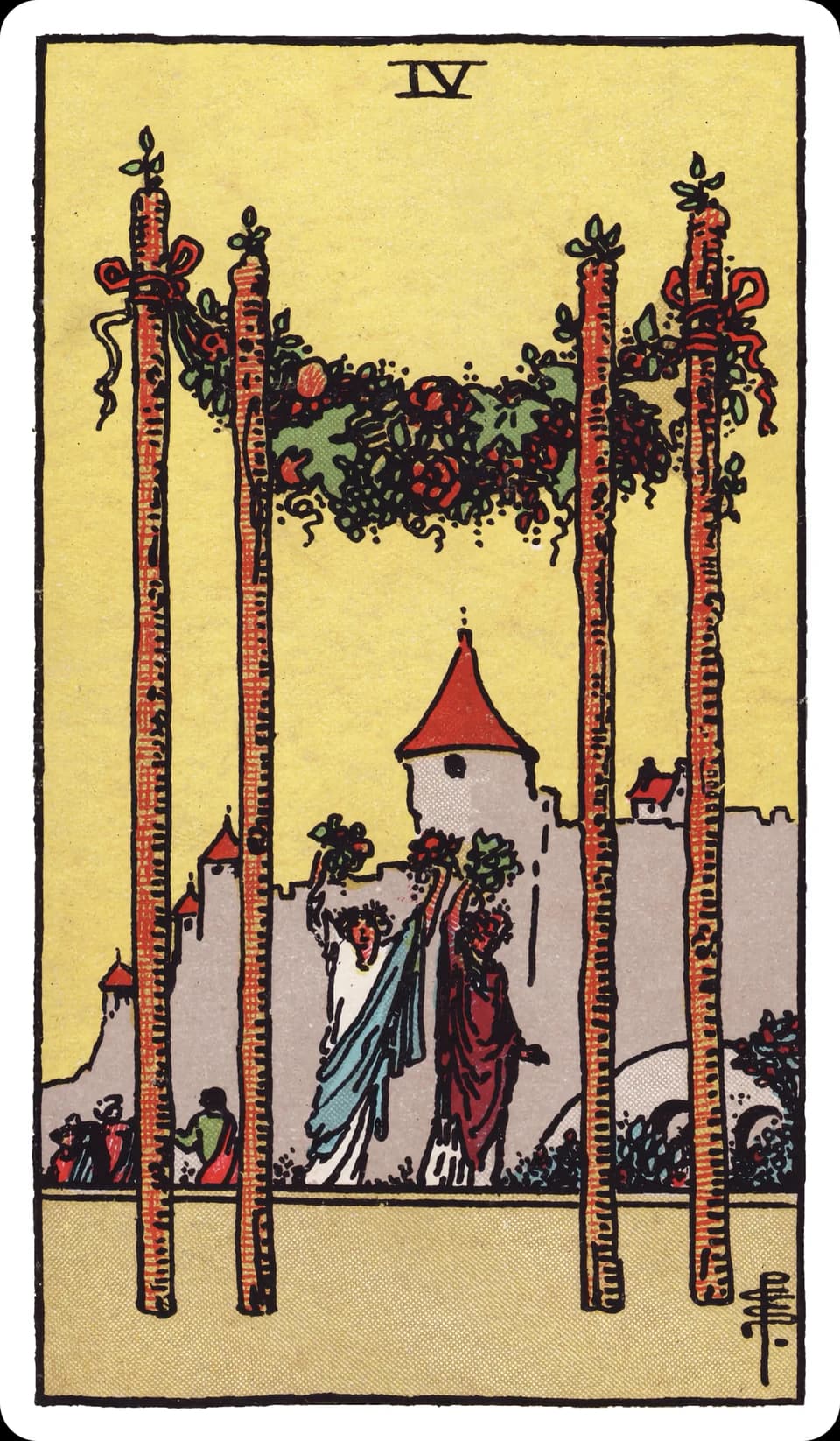
There’s comfort in a dependable routine or a place where you feel settled. The Four of Wands often carries that sense of celebration and belonging.
Other Fours explore the edges of stability. The Four of Pentacles can suggest protecting what you have, sometimes so tightly that flexibility becomes difficult. The Four of Swords makes space for rest and stillness.
A foundation can support us, shelter us, or become something we are reluctant to leave.
Five: when the familiar shifts
Five often introduces change, friction, or a challenge to an established situation.
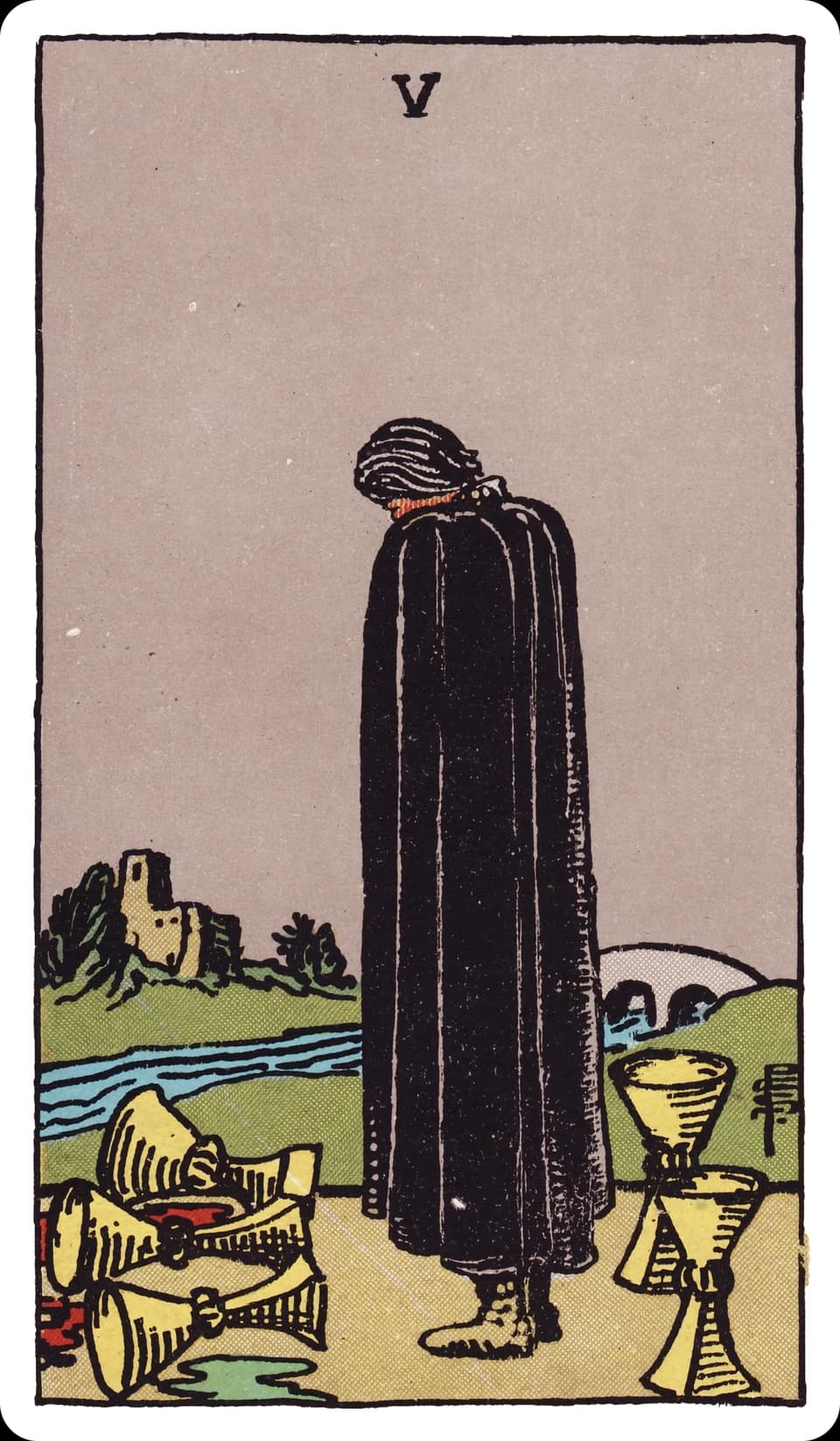
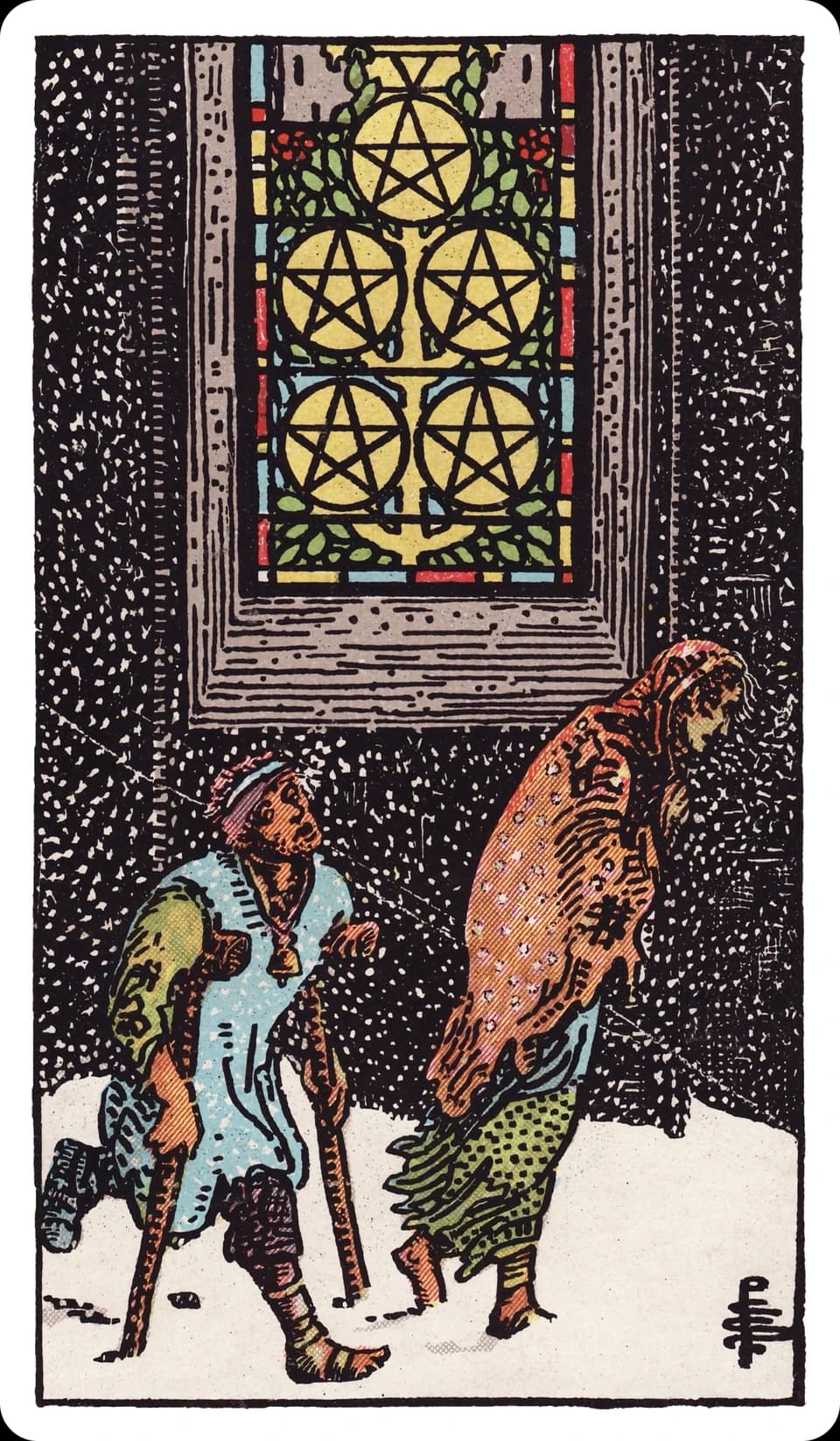
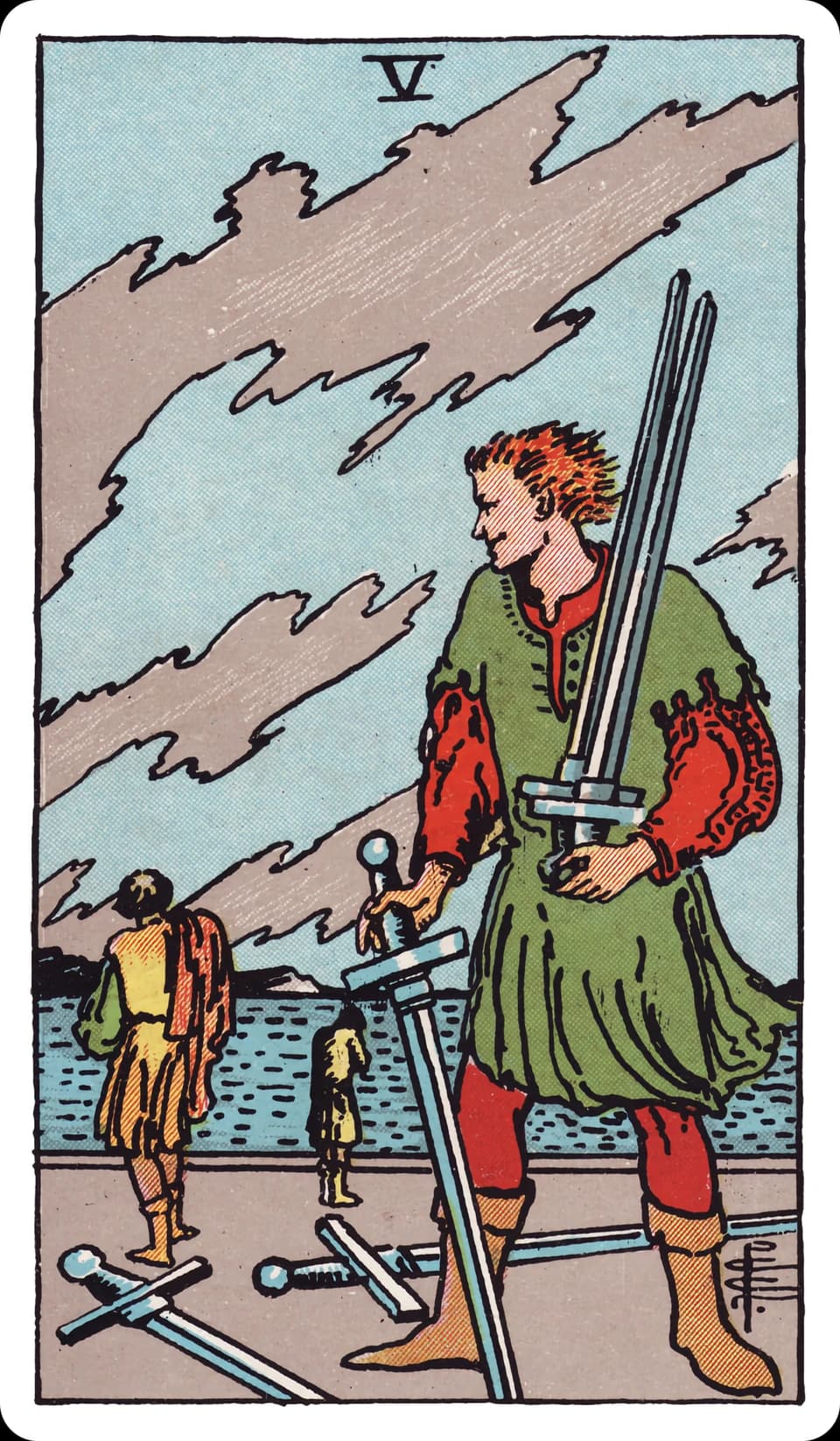
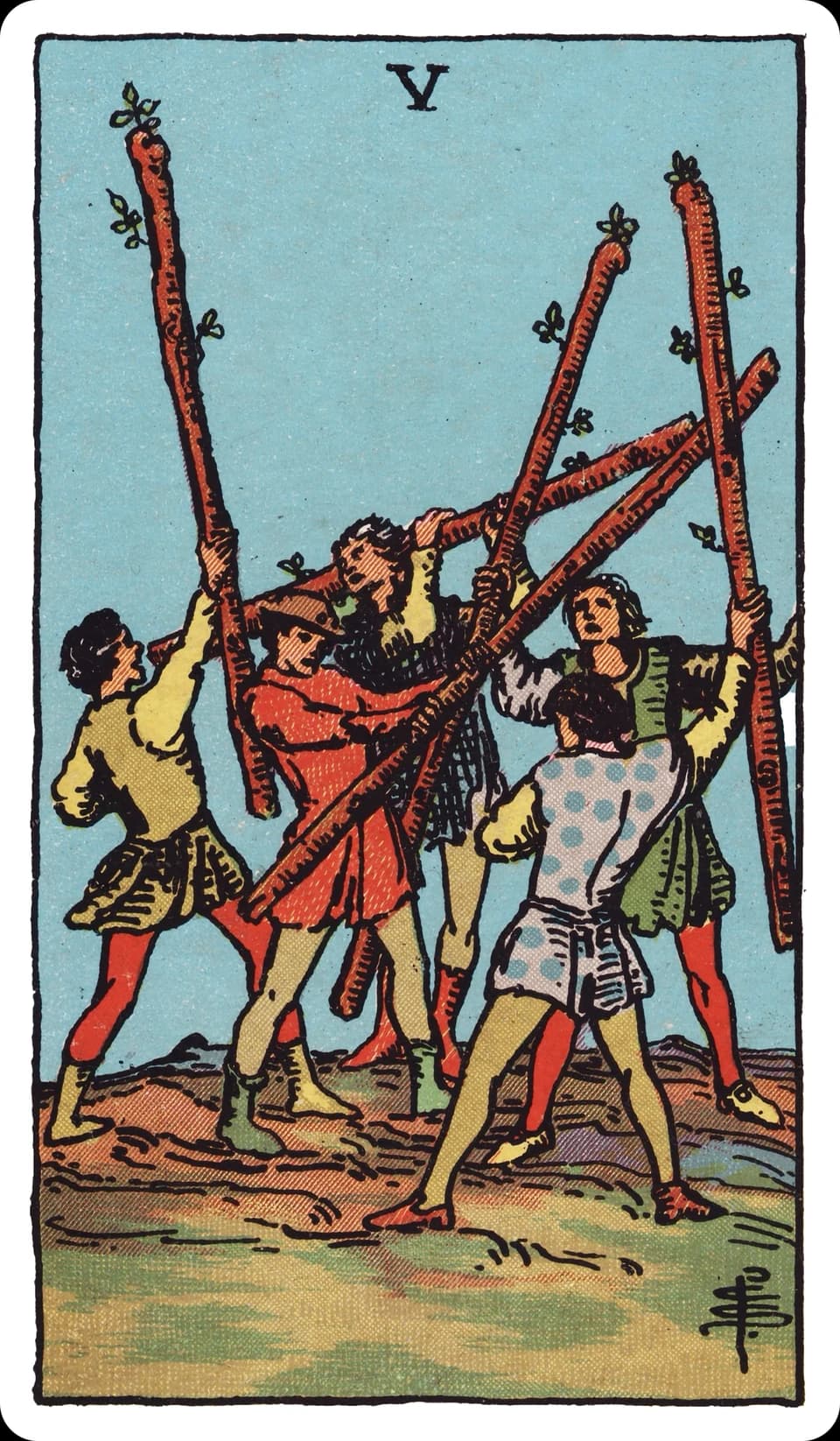
The Five of Wands depicts competing efforts and clashing directions. The Five of Cups focuses on disappointment and loss. The Five of Pentacles brings attention to hardship and a sense of being outside support or security.
These are different experiences, but each disturbs the familiar.
In a Tarot reading, a Five can provide language for difficulty or adjustment. It doesn’t automatically predict that something bad is about to happen.
Six: support and readjustment
Six is often associated with cooperation, care, and finding a more workable balance.
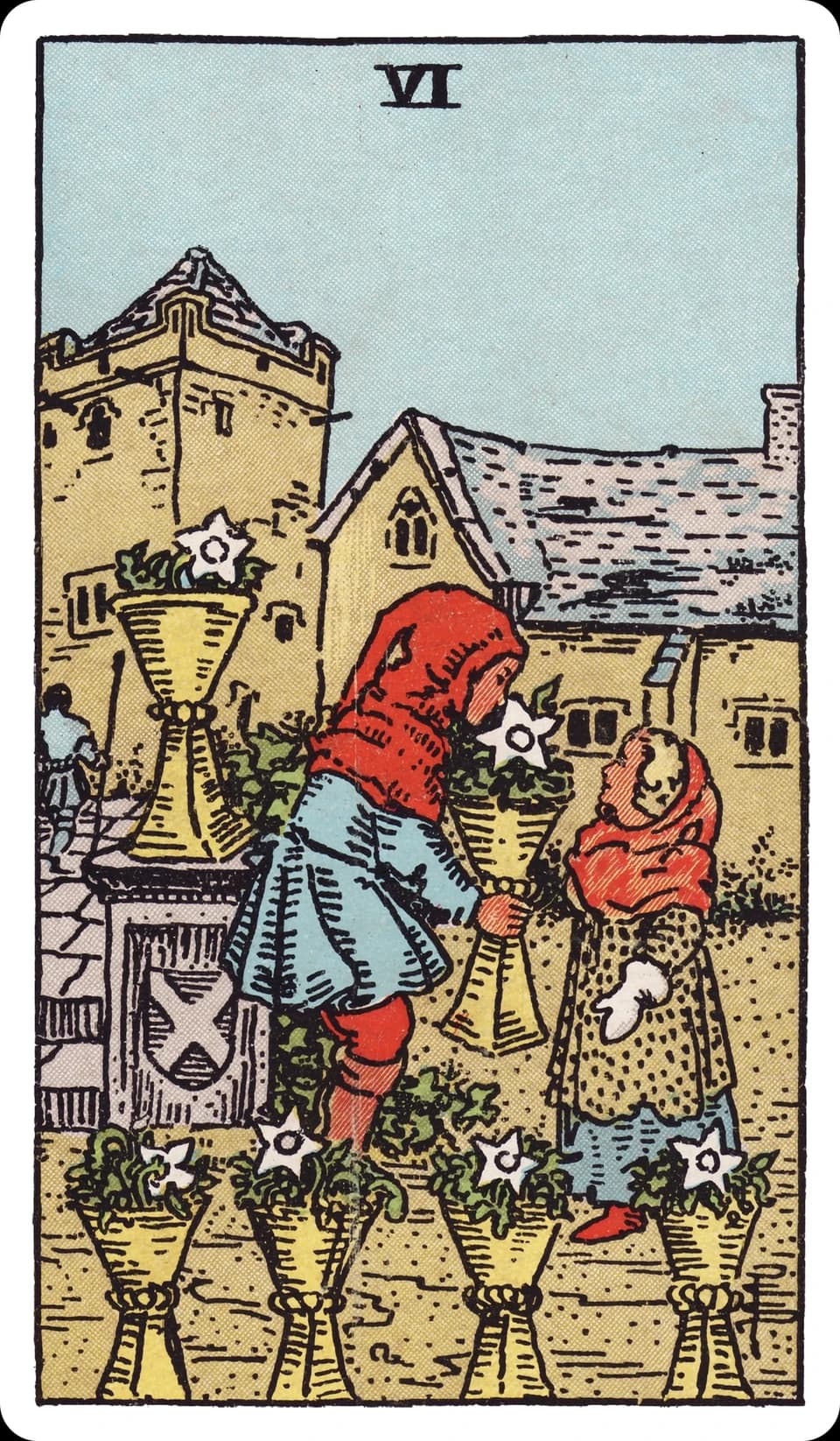
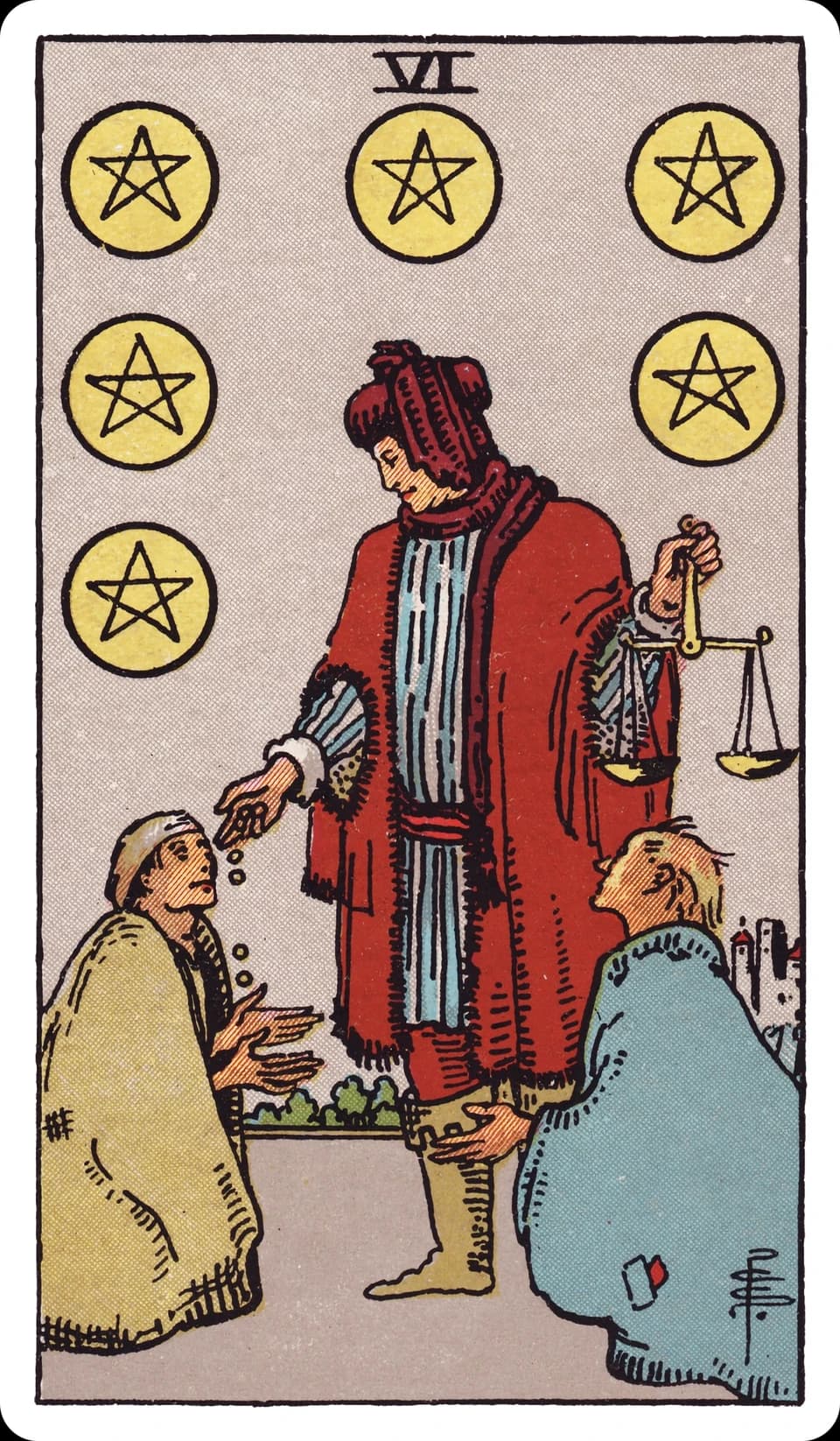
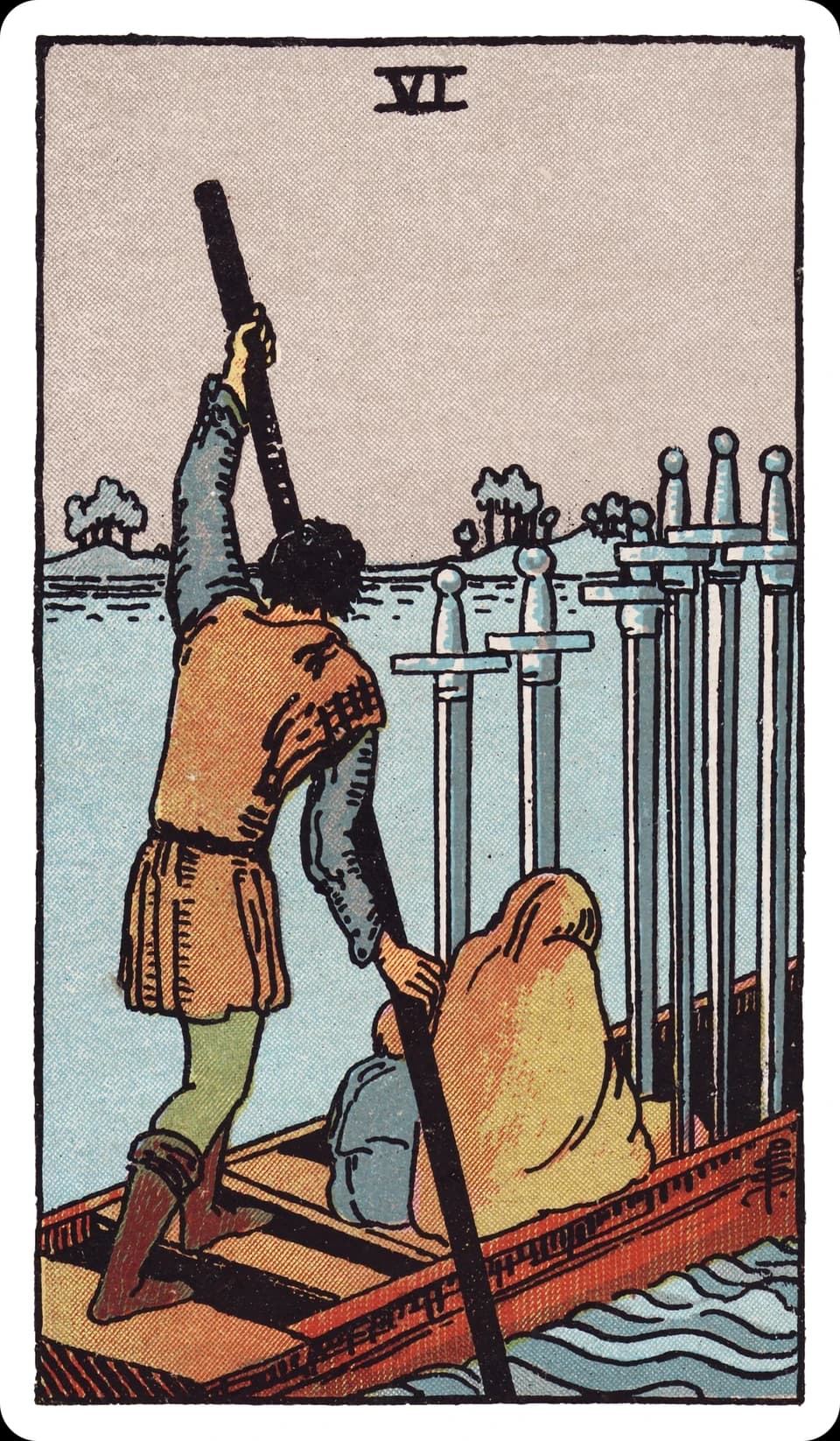
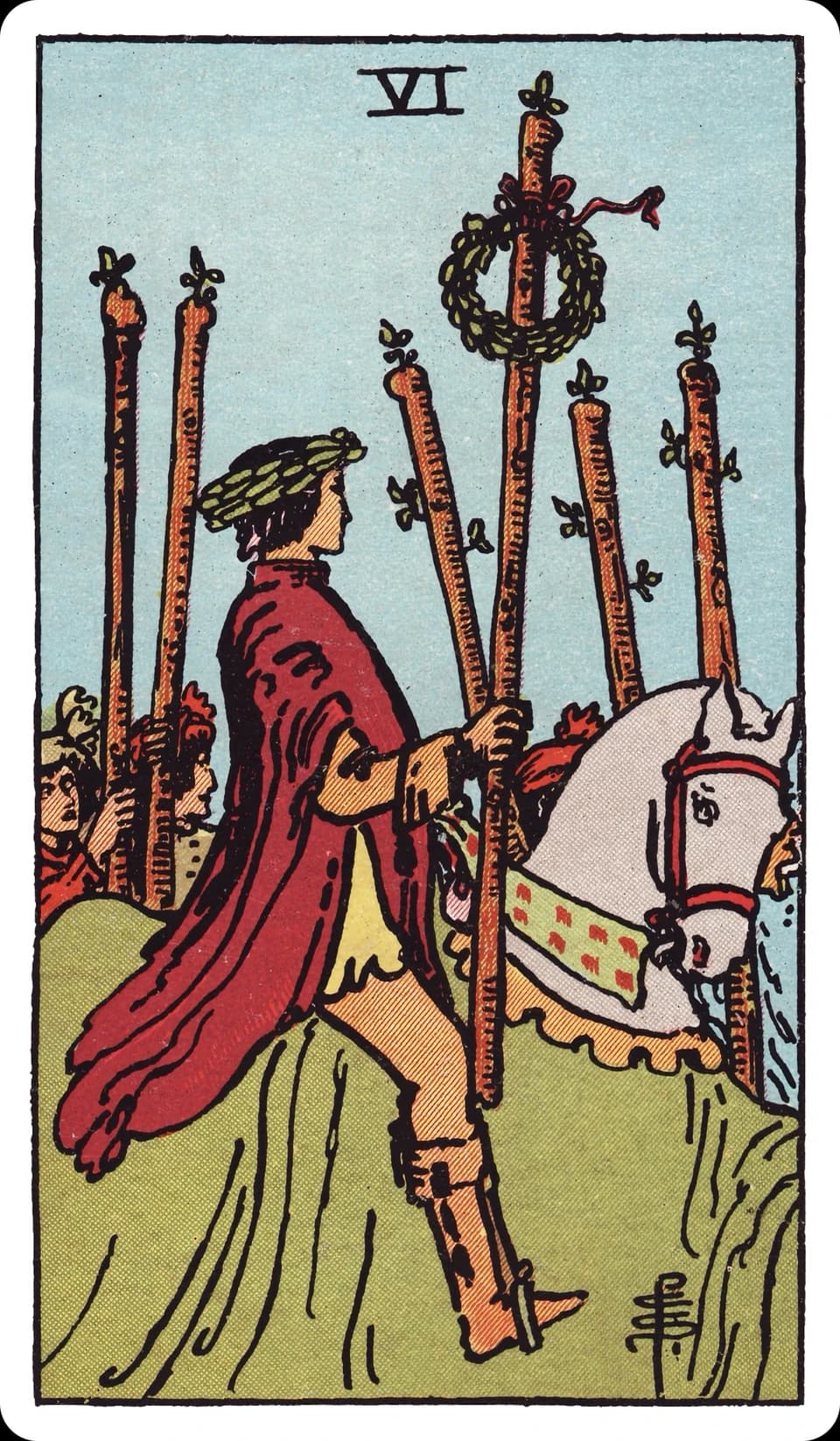
The Six of Pentacles explores giving and receiving help. The Six of Wands brings recognition after effort. In the Six of Swords, figures travel away by boat, an image commonly connected with transition and moving through difficulty.
There can be a sense of things becoming more manageable, even when everything hasn’t been resolved.
It’s the difference a little support can make, or the gradual relief of finding a way forward.
Seven: taking a closer look
Seven often invites assessment: considering your position, your options, or your approach.
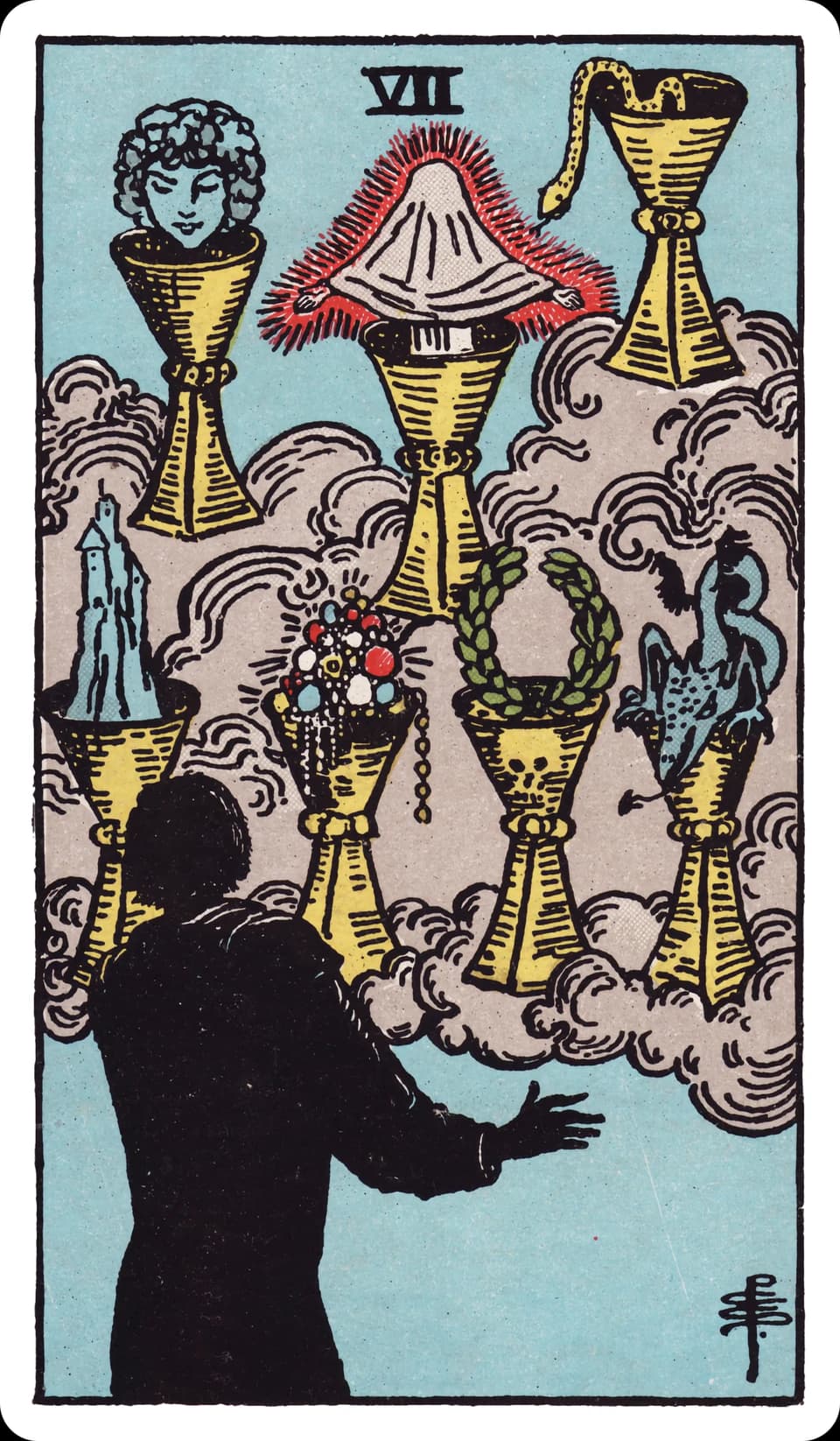
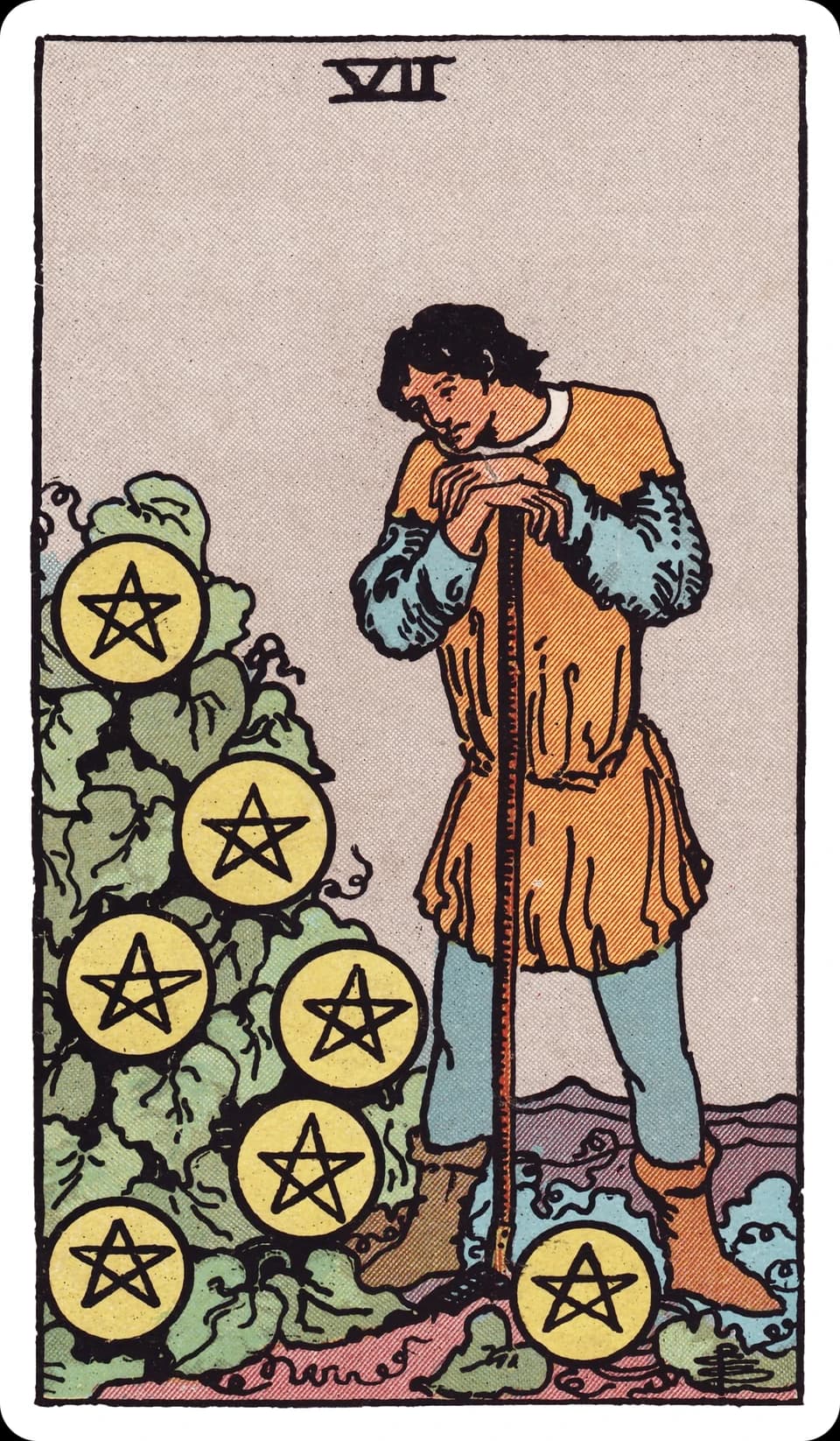
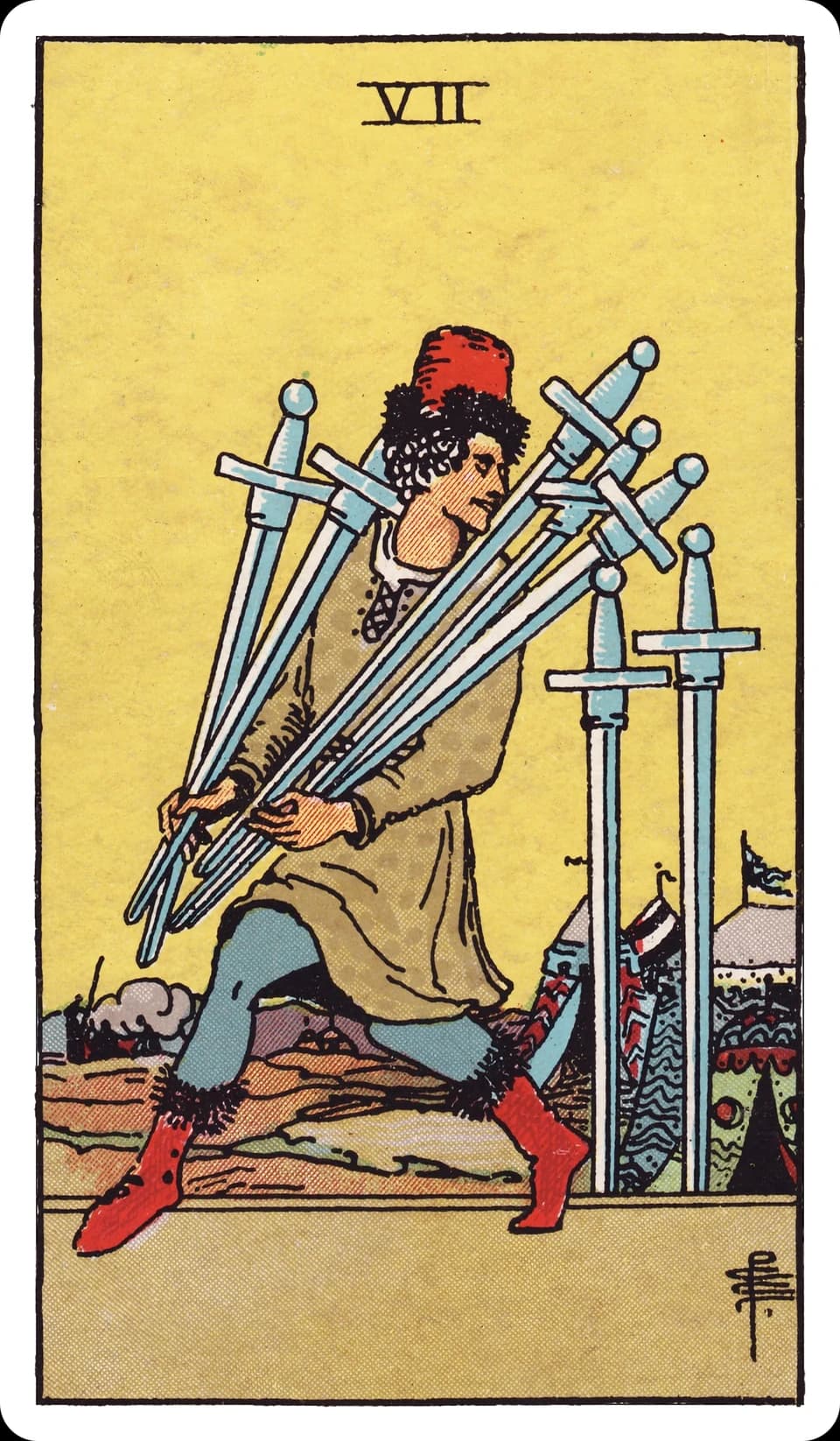
The Seven of Pentacles shows a pause to examine what has grown. The Seven of Cups presents possibilities that may be appealing, confusing, or difficult to evaluate.
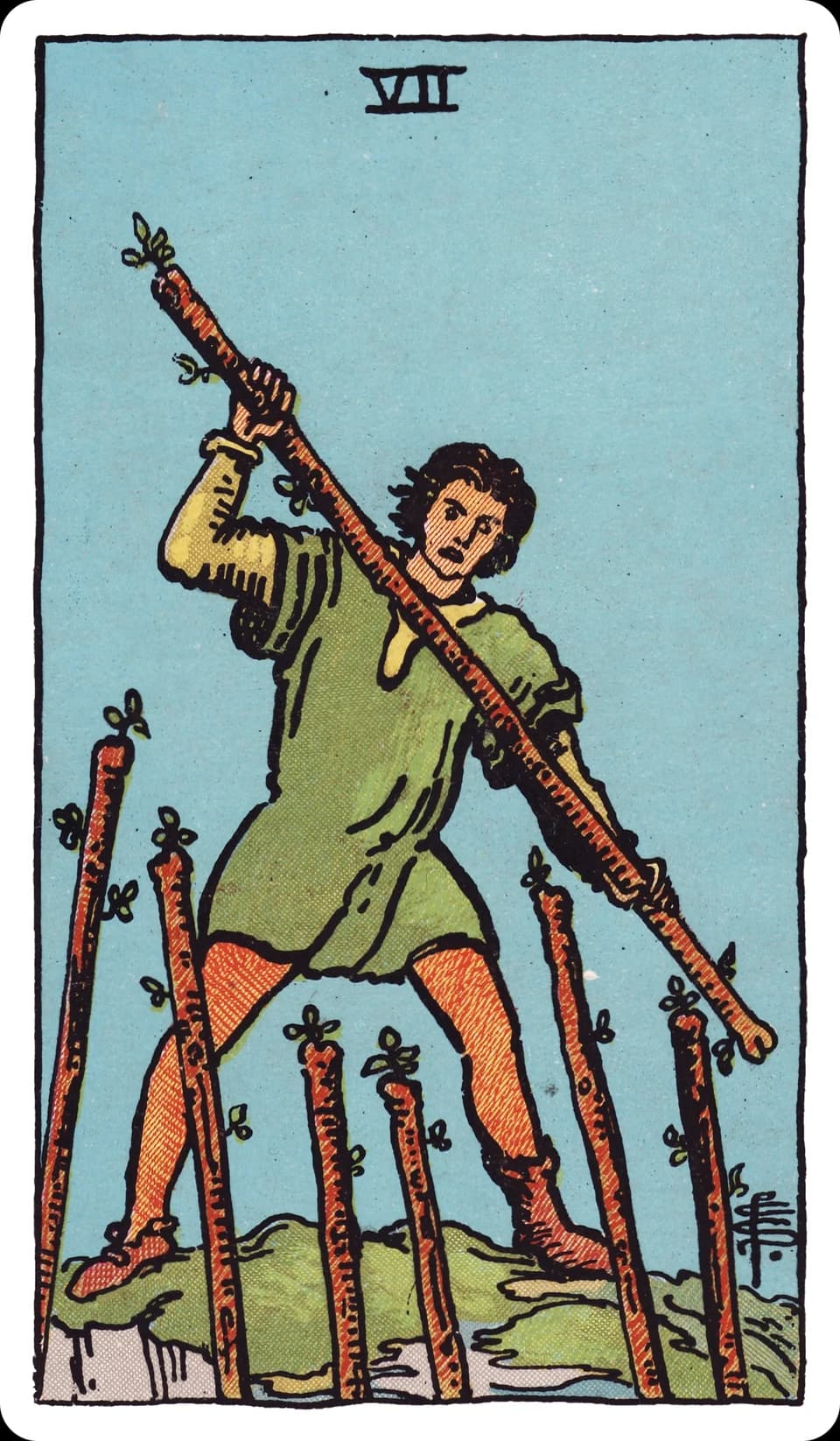
The Seven of Wands adds a more active challenge: holding your ground.
Together, these cards offer different versions of a familiar moment: deciding what deserves continued effort, what you believe in, and how you want to proceed.
Eight: effort, movement, and agency
Eight is often linked with action, capability, and the way energy is directed.
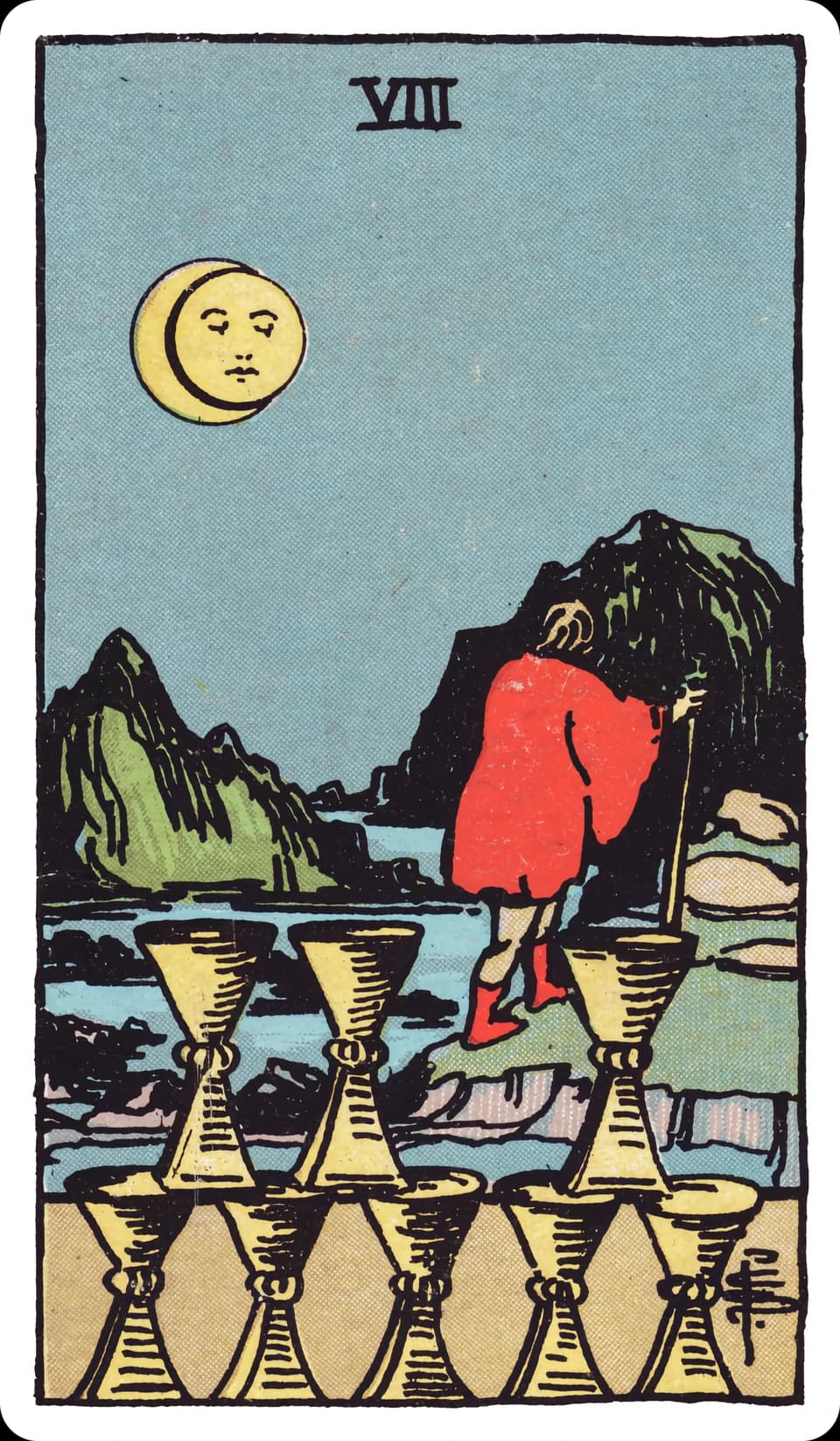
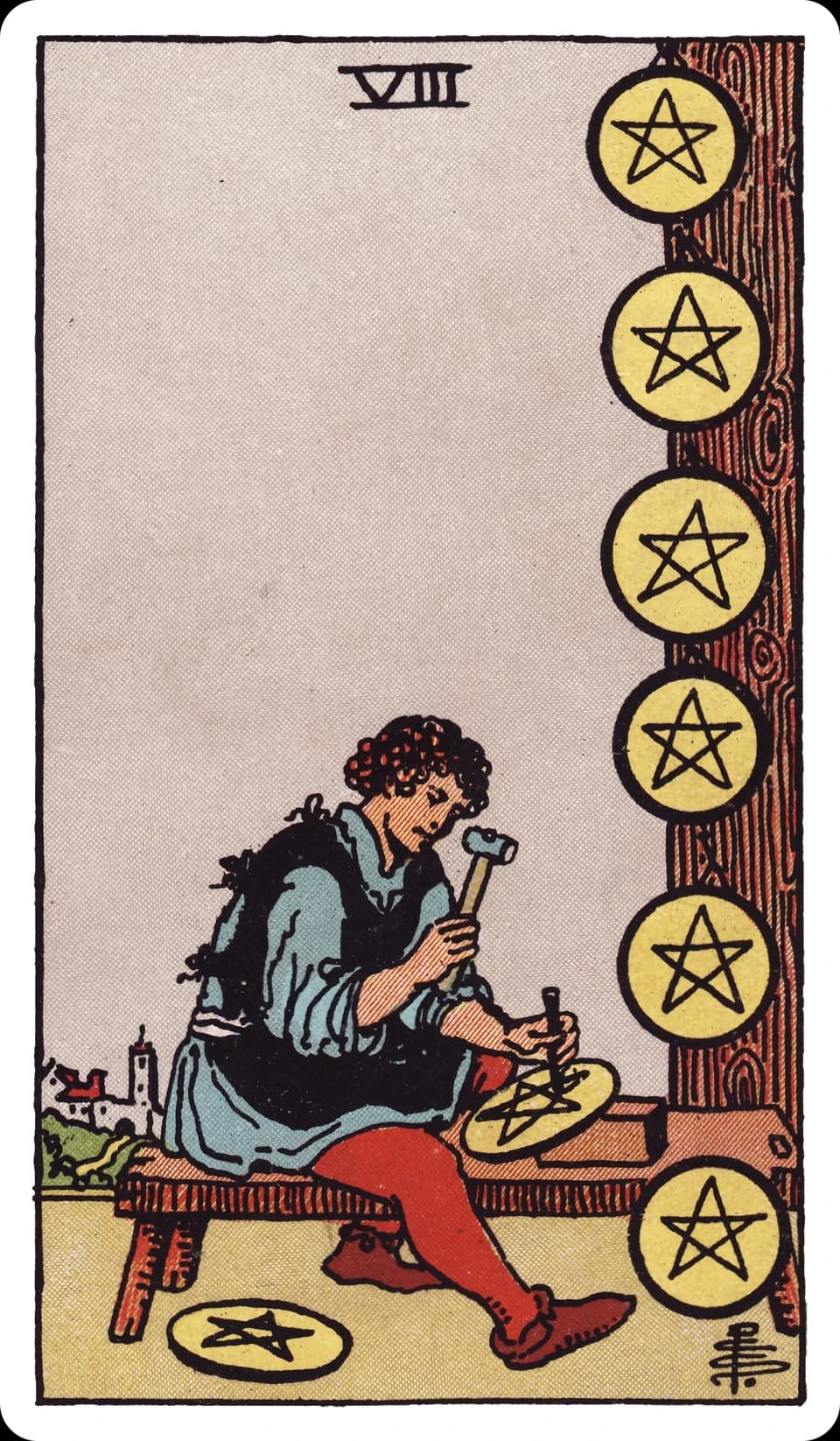
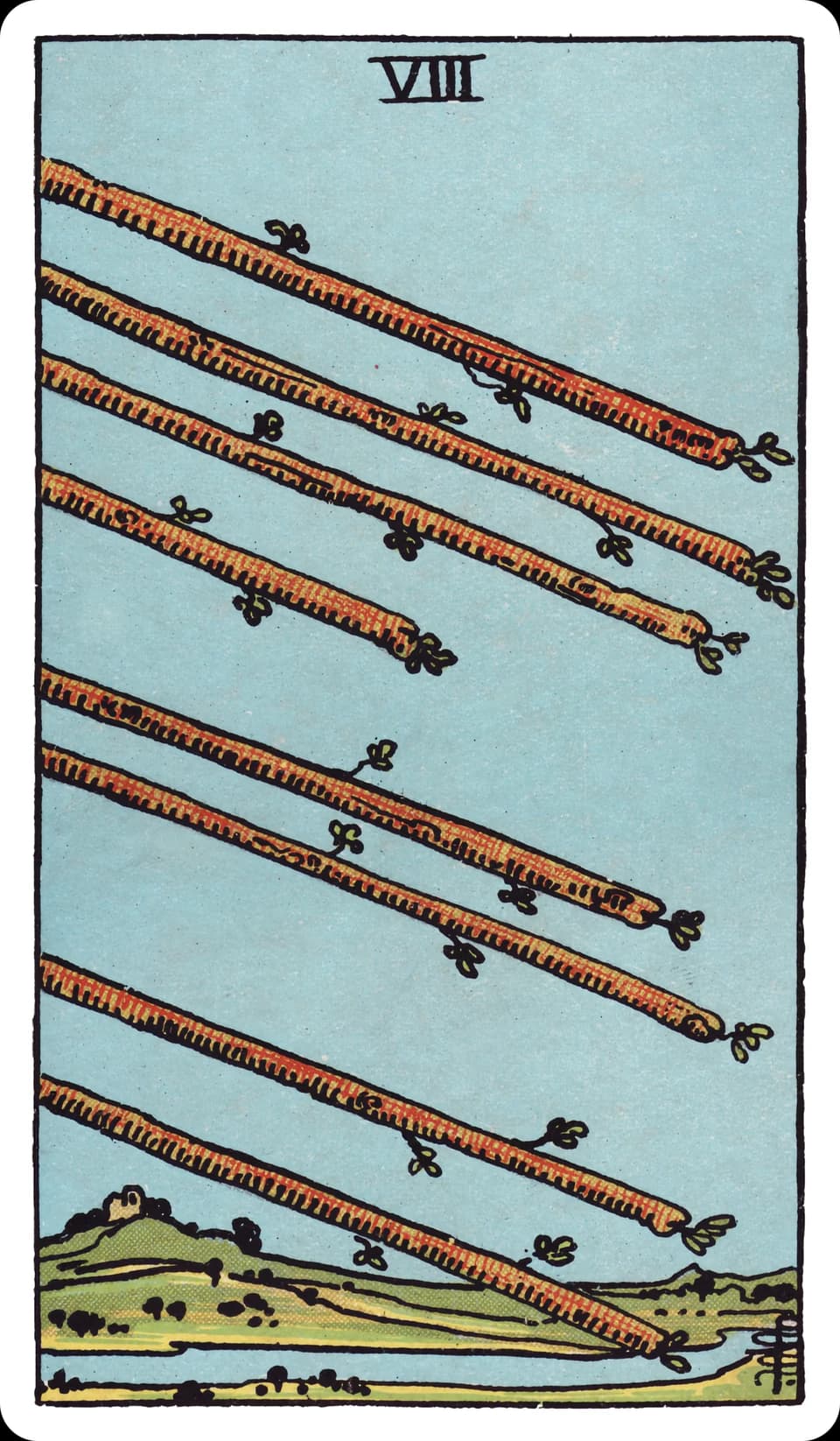
In the Eight of Pentacles, a craftsperson works carefully at a skill. The Eight of Wands suggests speed and momentum. The Eight of Cups depicts departure, often interpreted as leaving something that no longer feels fulfilling.
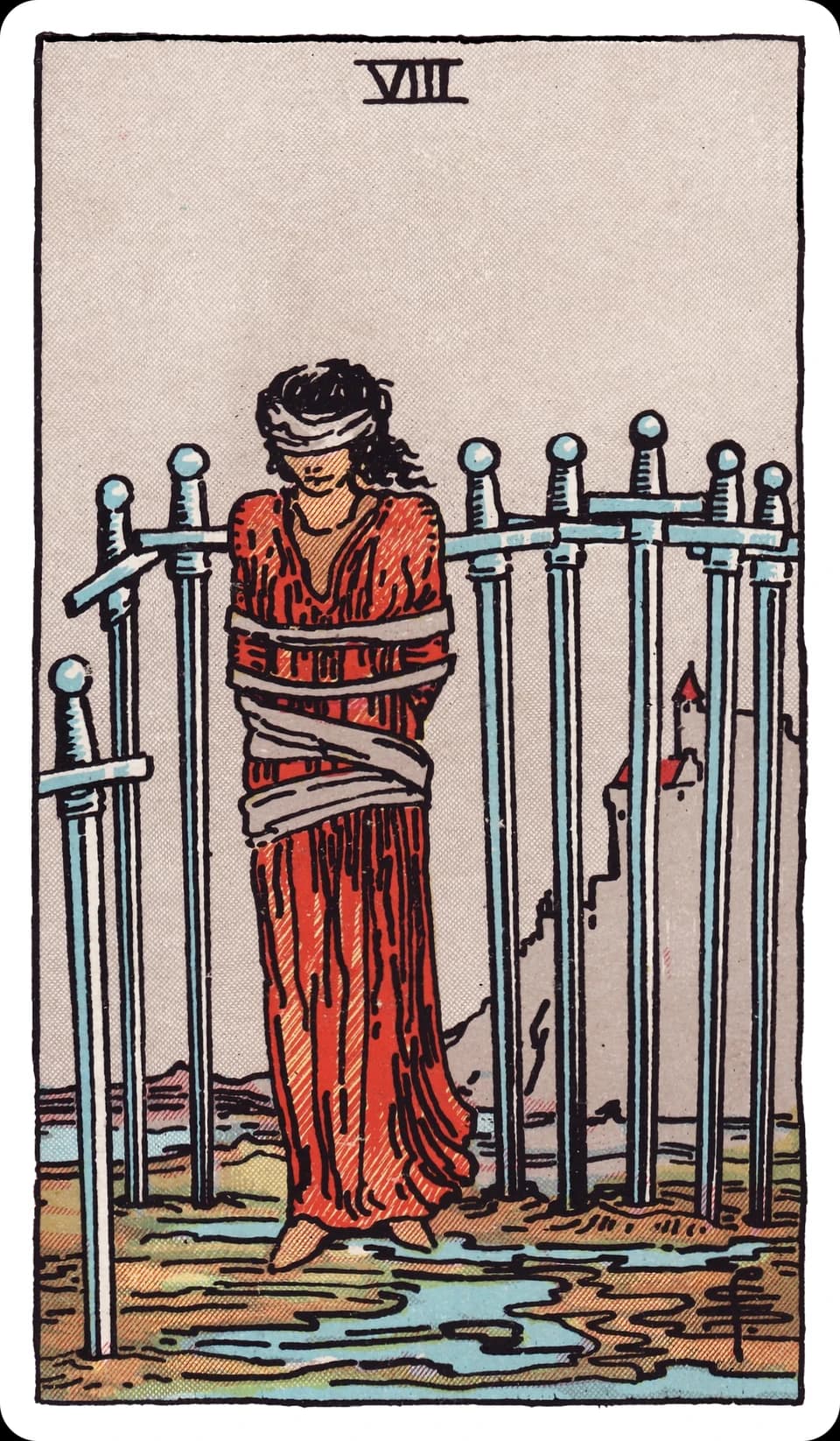
The Eight of Swords complicates the picture with an image of restriction. Here, the question of movement includes what seems to prevent it.
This is a useful reminder that a number’s theme can appear through its possibilities or its difficulties.
Nine: experience comes into focus
Nine often suggests that something has developed towards fruition or reached an advanced stage.
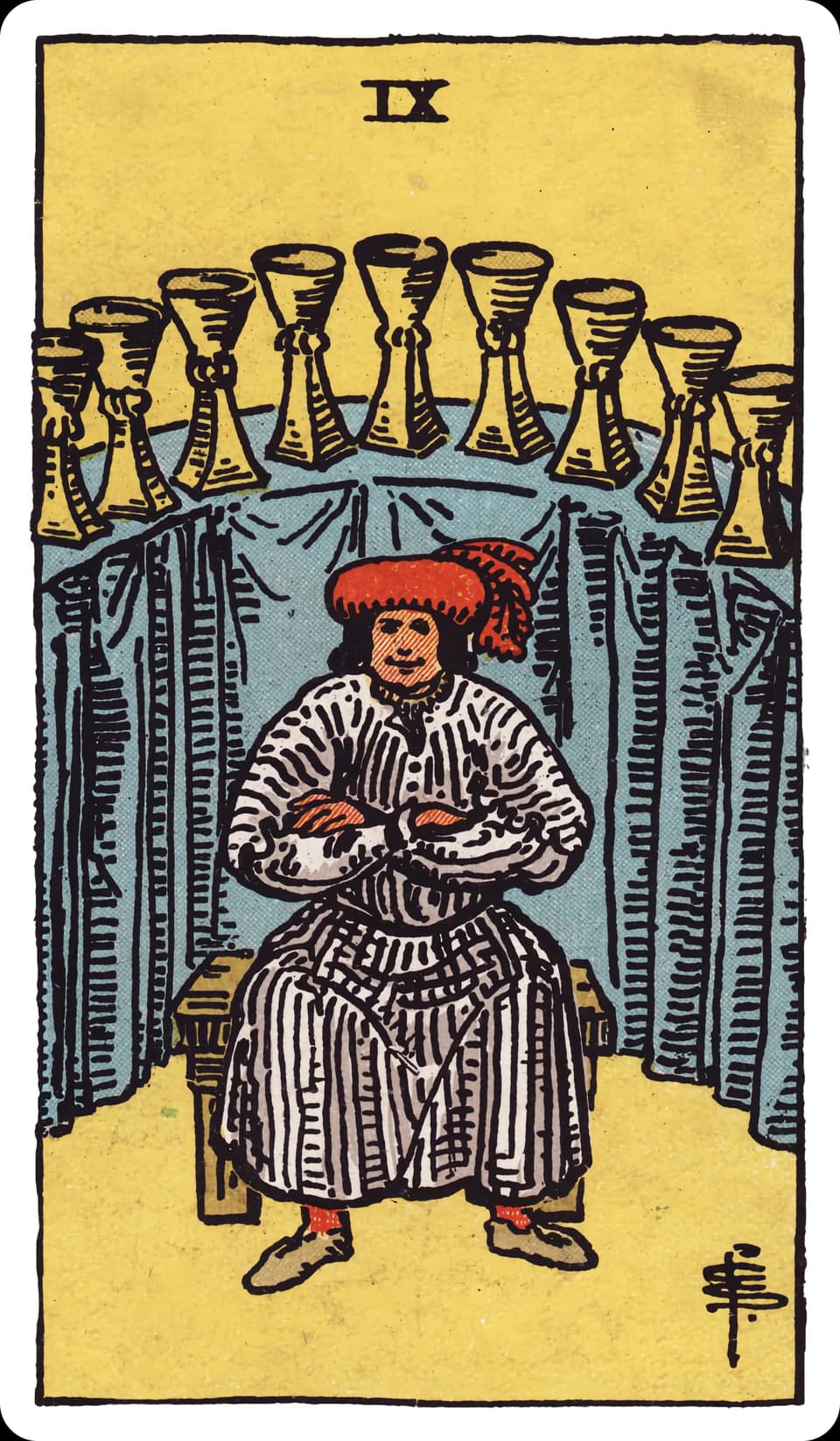
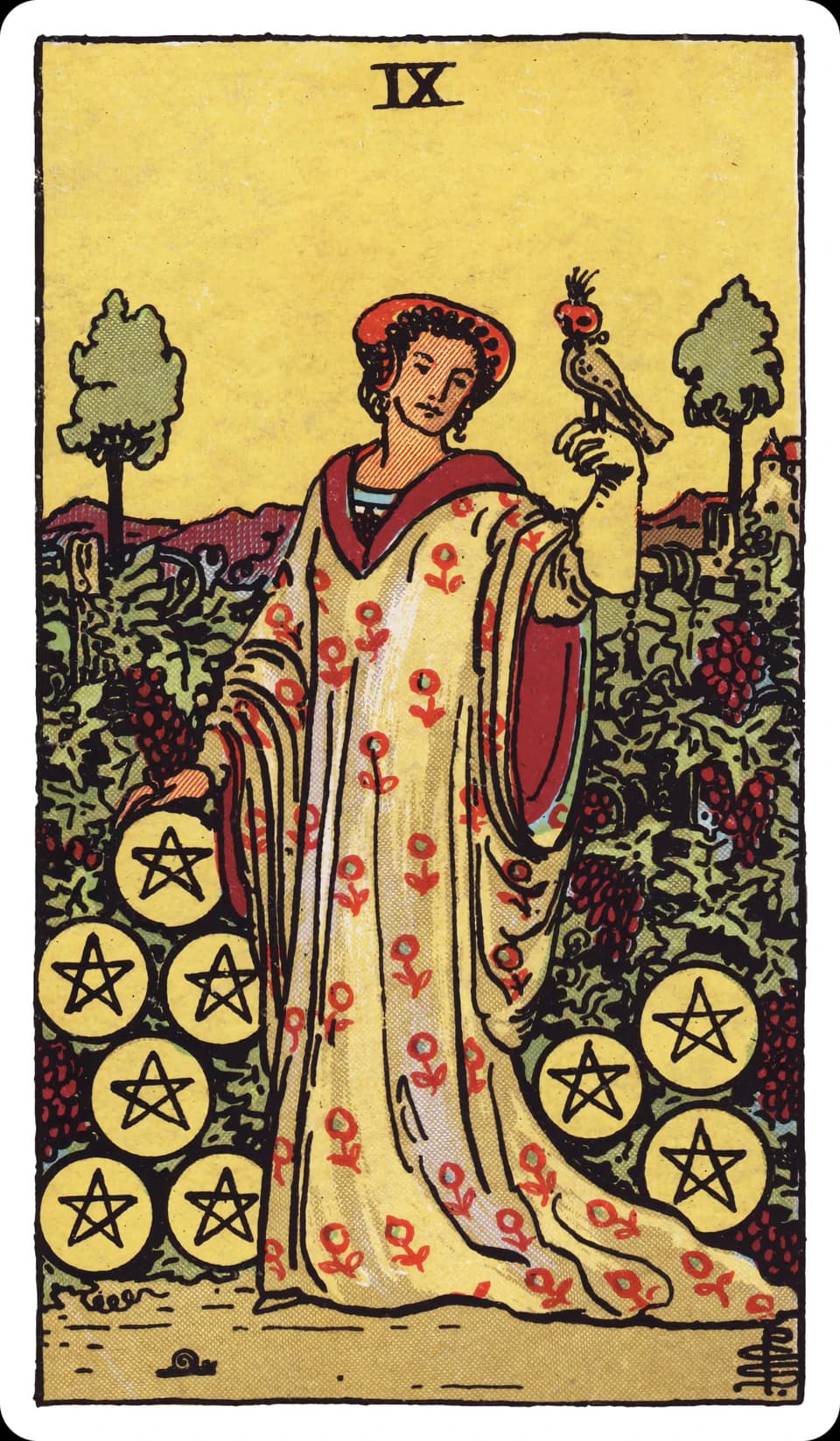
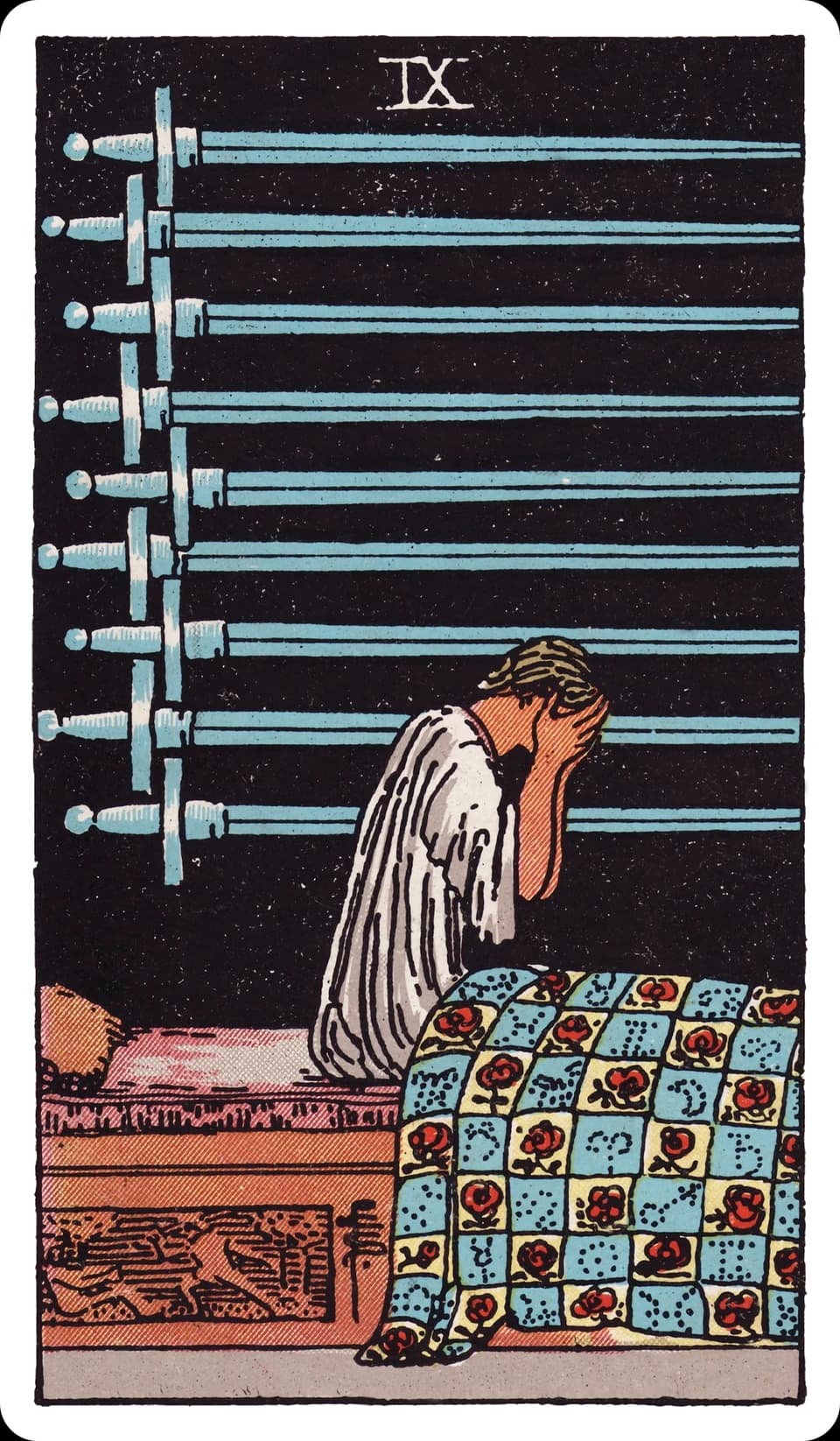
The Nine of Pentacles can express independence and enjoyment of what has been cultivated. The Nine of Cups is associated with satisfaction.
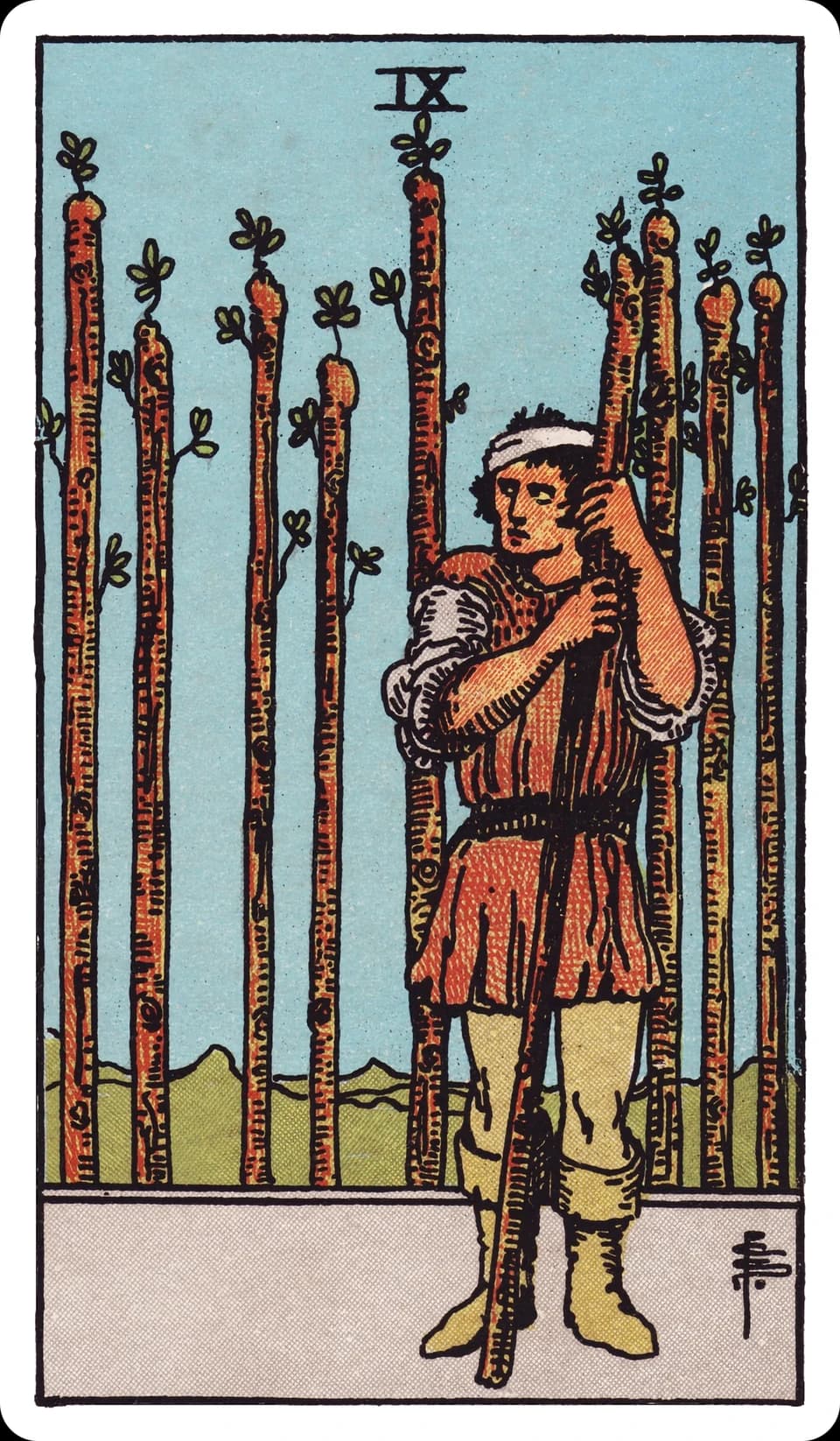
Yet the Nines also include the weariness of the Nine of Wands and the worry of the Nine of Swords. Reaching this stage doesn’t guarantee ease.
There may be something to appreciate, something to endure, or something that needs attention before a chapter can close.
Ten: a cycle reaches its full expression
Ten is commonly associated with culmination, completion, and the possibility of a new cycle.
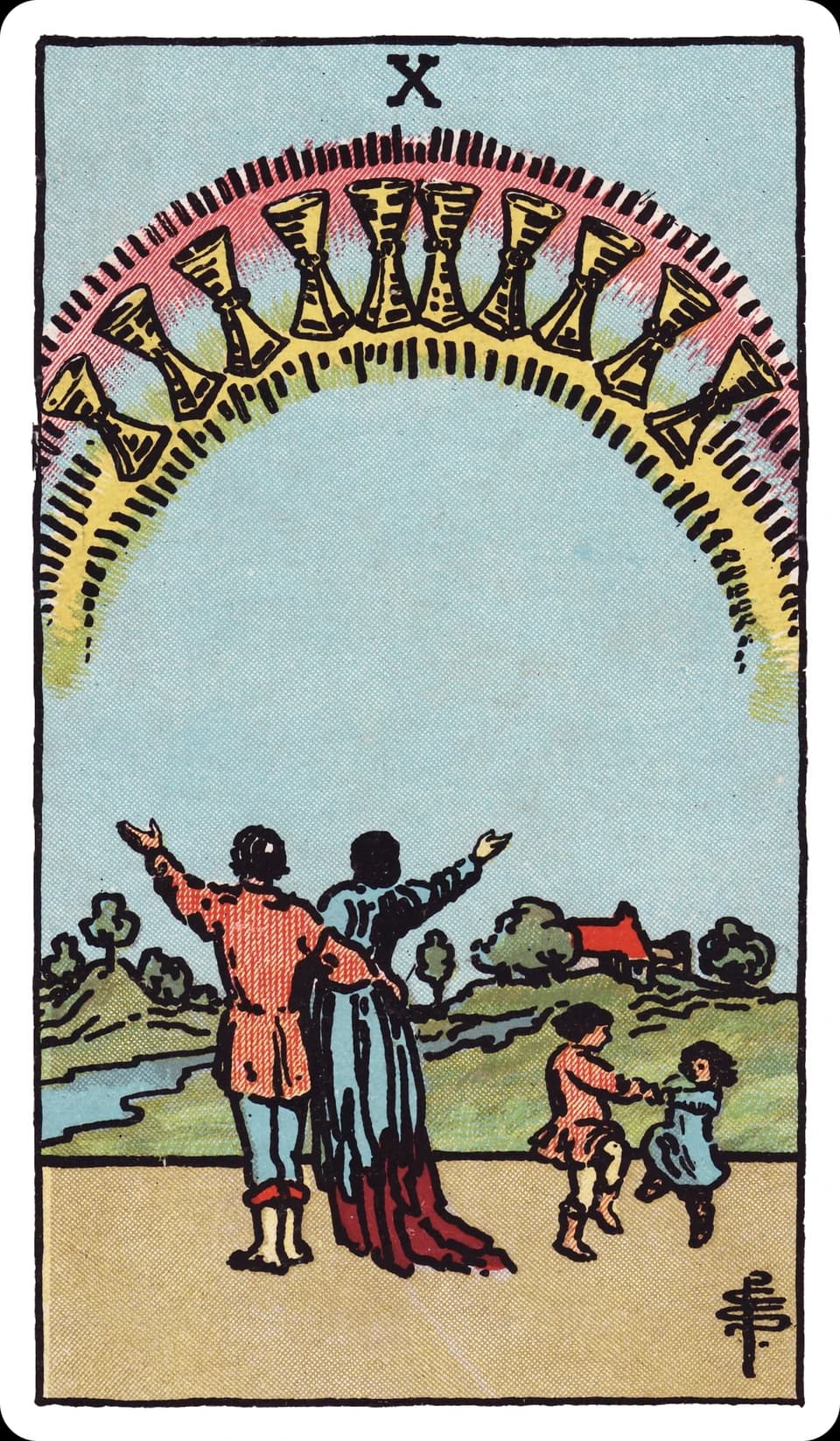
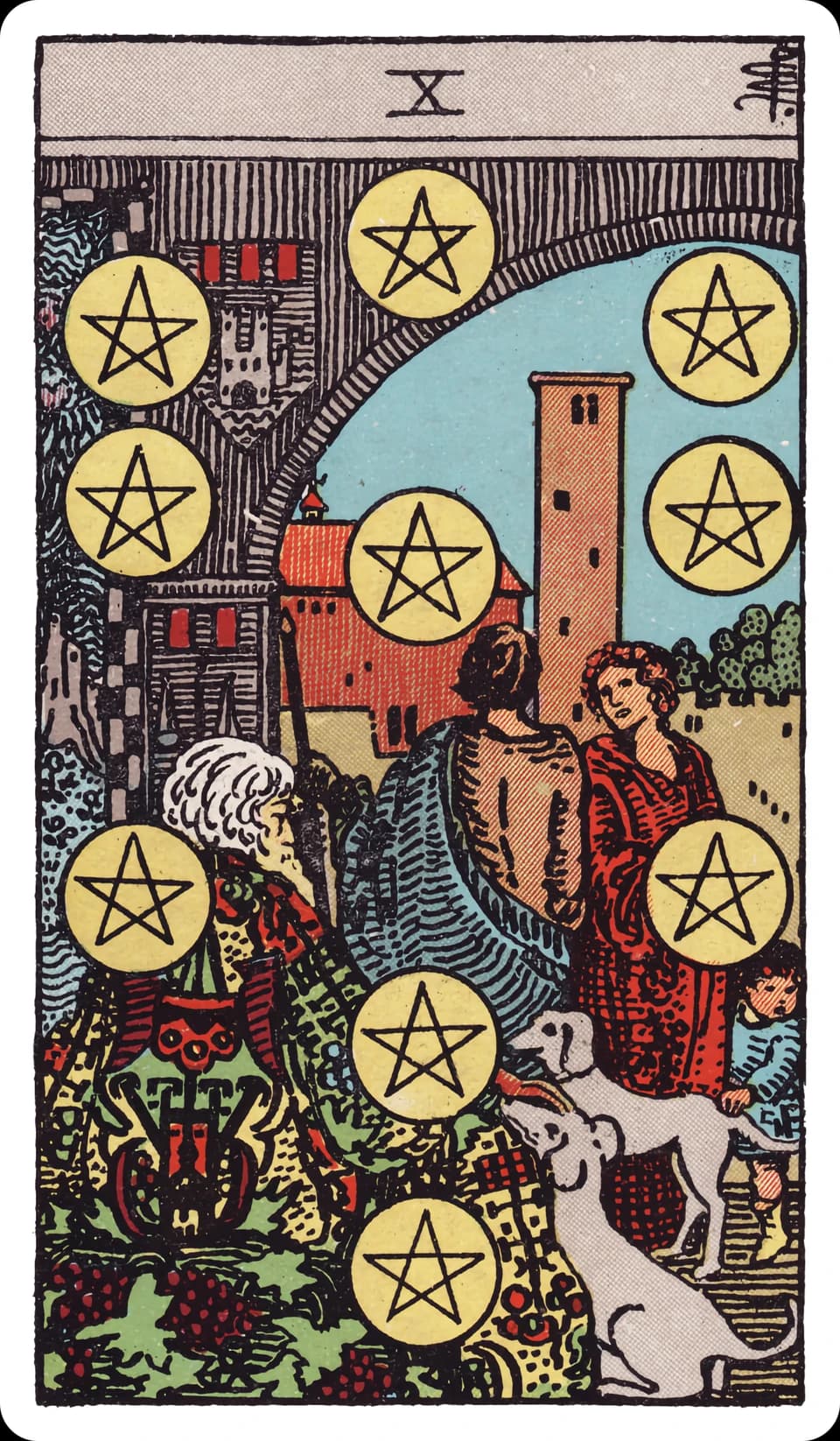
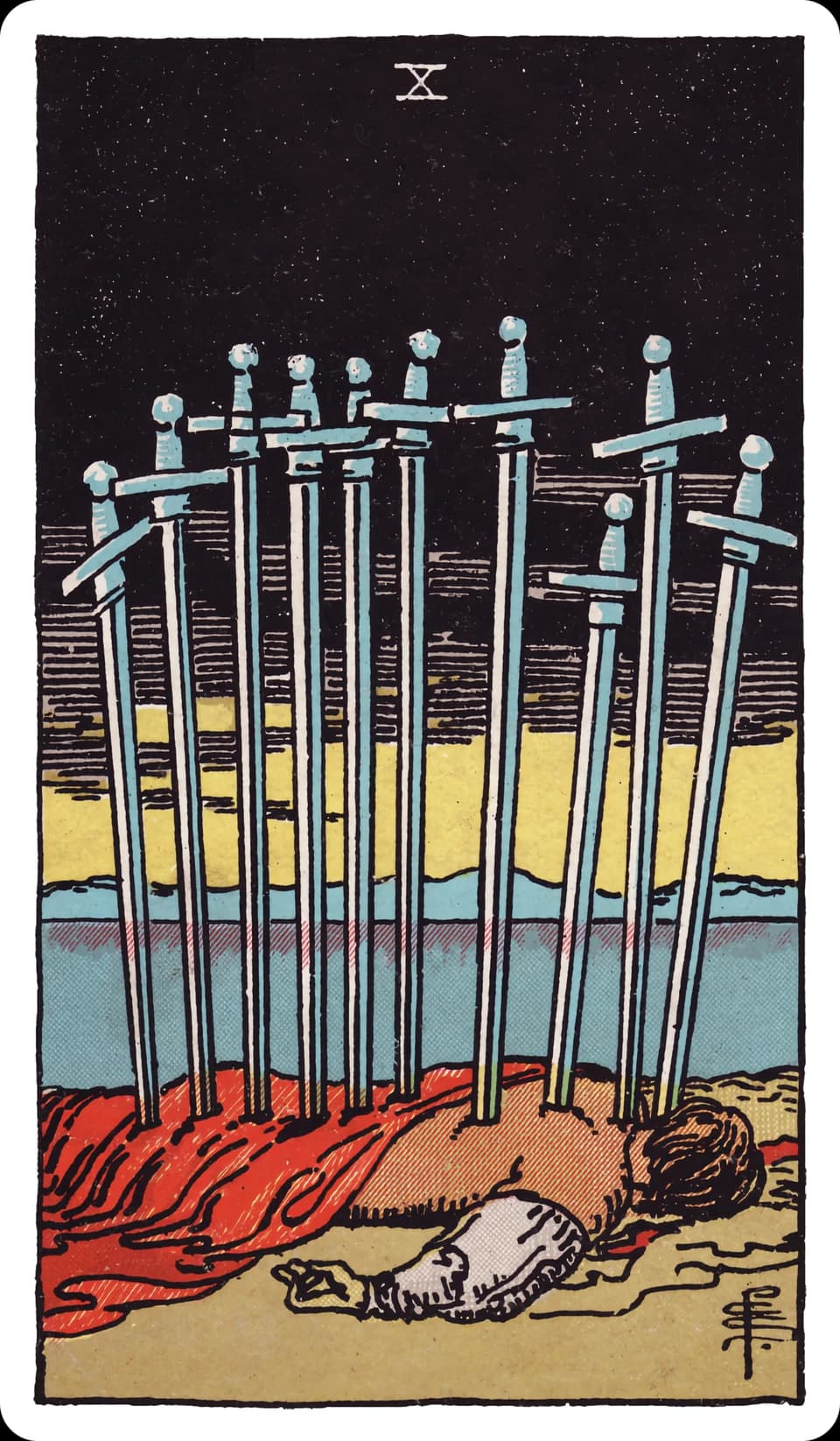
The Ten of Cups depicts emotional fulfilment and connection. The Ten of Pentacles considers lasting security and what extends across generations.
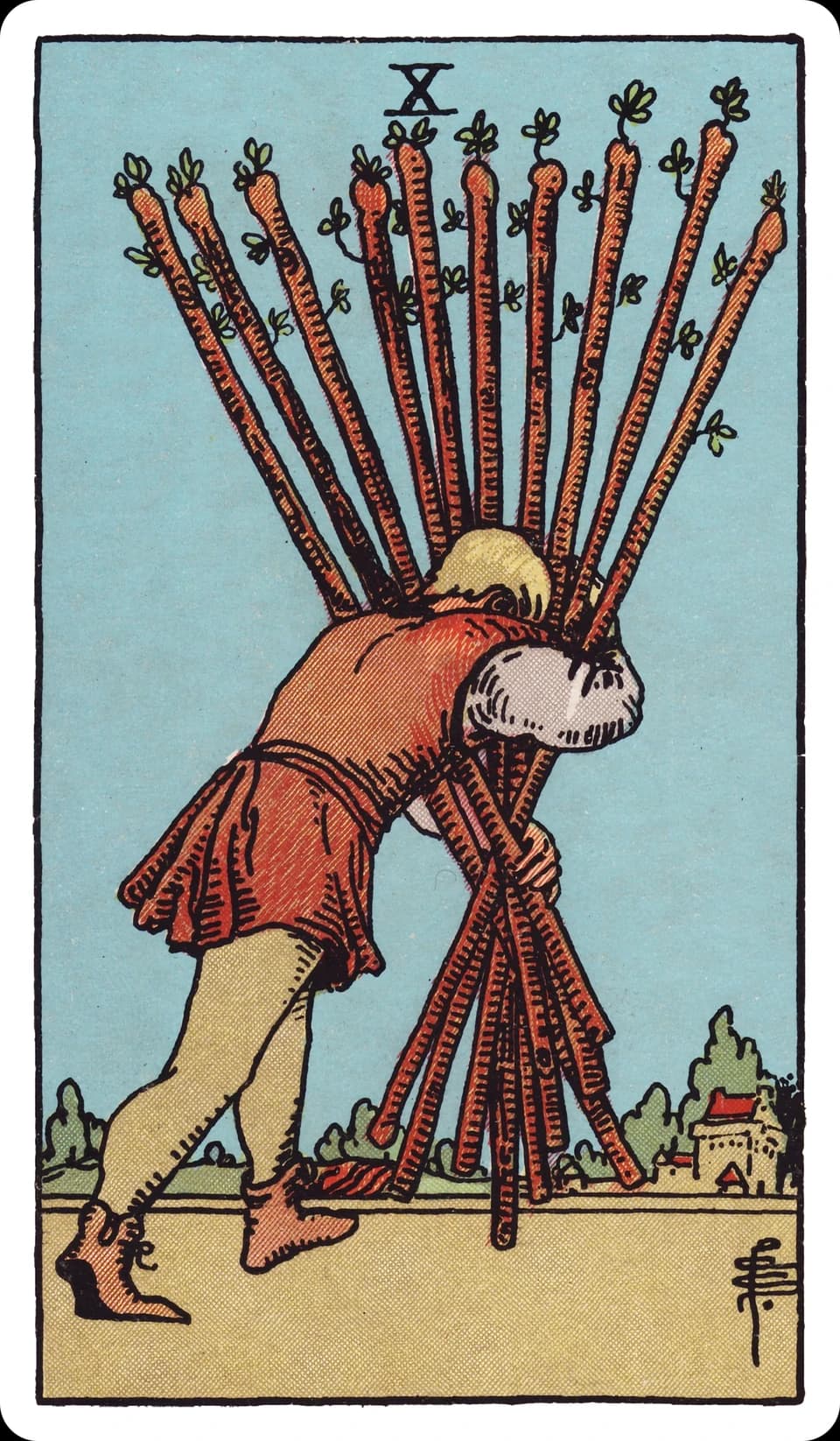
The Ten of Wands shows responsibilities becoming burdensome, while the Ten of Swords portrays a painful ending.
Completion can bring happiness, relief, exhaustion, or several feelings at once. The suit and image help explain what has reached its limit or come into fullness.
How numbers and Tarot suits work together
The number offers a broad pattern. The suit brings that pattern into a particular area of experience:
- Cups: feelings, relationships, and connection.
- Pentacles: resources, work, and practical life.
- Swords: thoughts, communication, and decisions.
- Wands: creativity, motivation, and action.
If you’d like a fuller introduction, explore Getting to Know the Four Tarot Suits.
Take the Two of Pentacles as an example. Two introduces balance and competing considerations. Pentacles brings us into everyday responsibilities. The image of a person juggling coins adds the sense that this balance takes ongoing adjustment.
Together, those details offer much more than a single keyword.
Learning the numbers, one card at a time
You don’t need to memorise every association before using Tarot numerology. Start by comparing two cards with the same number. Notice what they share, then look for what makes their stories different.
As you become familiar with the deck, numbers can help you remember Tarot card meanings and recognise connections you might otherwise miss. Leave room for the image, the question, and the individual card to add something unexpected.
When you’re ready to explore further, browse all 78 Tarot card meanings at Taromi, with explanations of their imagery and upright and reversed interpretations.